
Nuclear Medicine

Providing vital insights at a molecular level.
At St. Luke’s Radiology, nuclear medicine is a specialized branch of medical imaging that provides unique insights into the function and metabolism of organs and tissues at a molecular level. Unlike traditional imaging techniques that primarily show anatomy, nuclear medicine uses small, safe amounts of radioactive materials, called radiopharmaceuticals or tracers, to reveal how organs are working. These tracers are administered to the patient and then detected by specialized cameras, creating images that highlight physiological processes and disease activity. This functional information is invaluable for early disease detection, accurate diagnosis, and monitoring treatment effectiveness across a wide range of conditions, including heart disease, cancer, and neurological disorders.
Understanding nuclear medicine
Nuclear medicine procedures involve administering a radiopharmaceutical, which travels through the body and accumulates in specific organs or tissues. A special camera, such as a gamma camera or PET scanner, then detects the energy emitted by the tracer and converts it into detailed images. These images provide functional information that can often detect abnormalities earlier than structural imaging.
- Cardiology: Used to assess blood flow to the heart muscle (cardiac stress tests), detect coronary artery disease, and evaluate heart function.
- Oncology: Plays a crucial role in detecting and staging various cancers, assessing treatment response, and identifying cancer recurrence. PET scans are a common nuclear medicine tool in oncology.
- Endocrinology: Evaluates thyroid function, identifies thyroid nodules, and assesses parathyroid glands.
- Neurology: Helps diagnose conditions like Alzheimer’s disease, Parkinson’s disease, and seizures by assessing brain activity and blood flow.
- Bone scans: Detects fractures, infections, and bone tumors, and monitors the spread of cancer to the bones.
- Kidney scans: Assesses kidney function, blood flow, and identifies blockages.
Why choose St. Luke’s for your nuclear medicine scan?
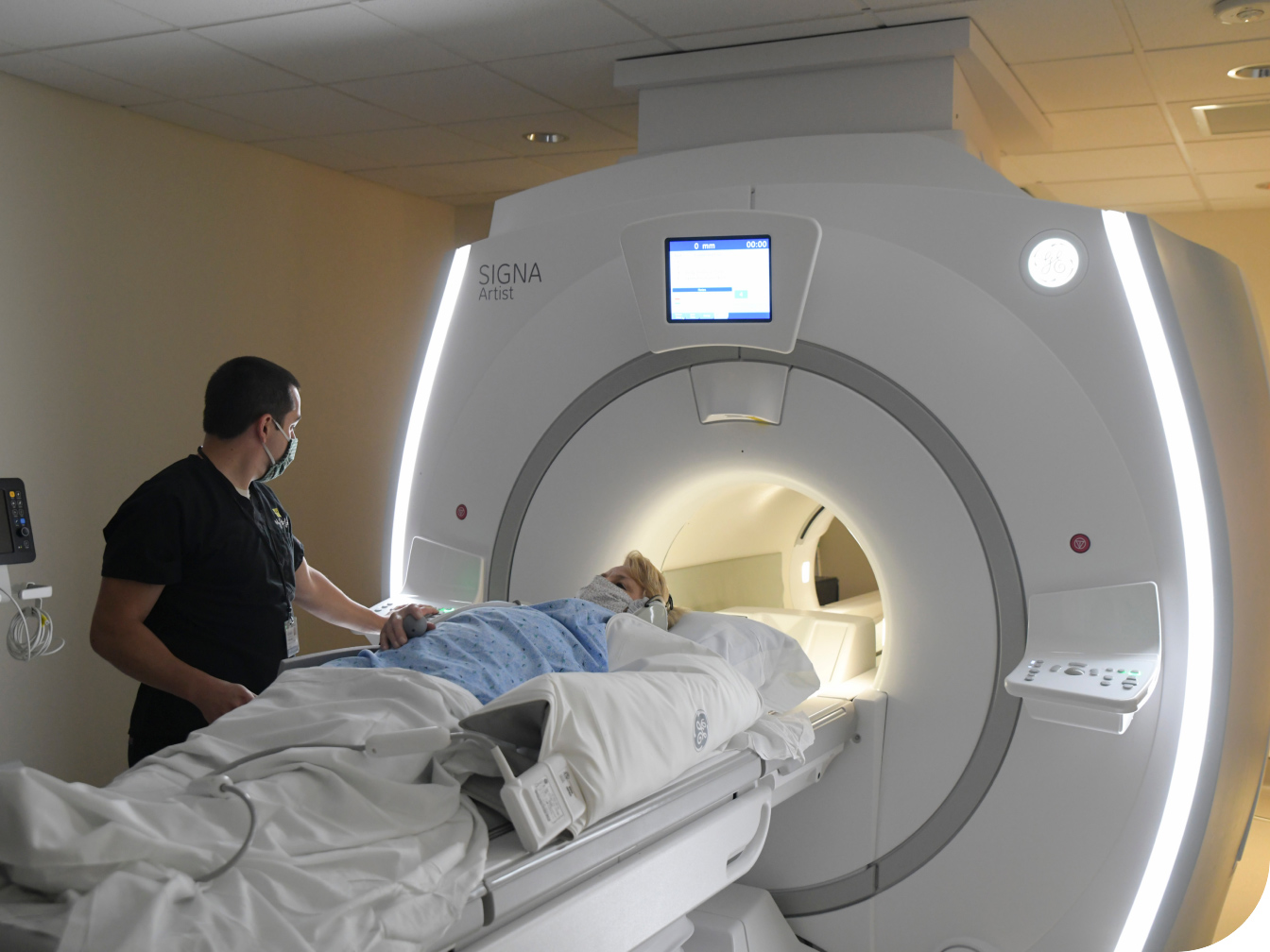
St. Luke’s Radiology team prioritizes patient safety and comfort through the utilization of advanced imaging technology.
- State-of-the-art equipment: We utilize advanced nuclear medicine cameras and imaging systems that provide high-quality, detailed images for accurate diagnoses.
- Expert physicians: Our board-certified nuclear medicine physicians and radiologists have extensive experience in interpreting complex nuclear medicine studies, ensuring precise and reliable results.
- Patient safety: We adhere to strict safety protocols for radiopharmaceutical administration and radiation exposure, ensuring your well-being throughout the procedure.
- Collaborative care: Your nuclear medicine results are seamlessly integrated into your overall healthcare plan, facilitating informed decision-making among your care team.
Frequently asked questions about nuclear medicine
Nuclear medicine is a medical specialty that uses small amounts of radioactive materials (radiopharmaceuticals) to diagnose and treat diseases. It provides unique information about how organs and tissues are functioning.
Nuclear medicine is used to diagnose and stage various cancers, assess heart function, evaluate thyroid and kidney function, and detect bone abnormalities, among other applications.
Yes, nuclear medicine procedures are generally safe. The amount of radiation used is very small, similar to that received during a conventional X-ray. Our team takes all necessary precautions to ensure patient safety.
The duration of a nuclear medicine scan can vary widely, from 30 minutes to several hours, depending on the type of study and the time required for the radiopharmaceutical to be absorbed by the body.
Preparation depends on the specific nuclear medicine procedure. You may be asked to fast, avoid certain medications, or follow specific dietary restrictions. Detailed instructions will be provided by your physician or our scheduling team.

Schedule your nuclear medicine scan today
When a functional understanding of your body is essential for diagnosis and treatment planning, trust St. Luke’s Radiology for your nuclear medicine needs. Our commitment to advanced technology, expert interpretation, and patient-centered care ensures you receive the highest quality diagnostic services. Don’t delay in getting the answers you need; nuclear medicine provides vital insights for effective health management.