
Ultrasound
Safe and versatile diagnostic scans.

The versatility of ultrasound imaging.
At St. Luke’s Radiology, ultrasound imaging stands as a cornerstone of our diagnostic services, offering a safe, non-invasive, and versatile method to visualize internal body structures. Unlike X-rays or CT scans, ultrasound uses high-frequency sound waves to create real-time images, making it an ideal choice for a wide range of medical applications, particularly when radiation exposure is a concern. This dynamic imaging technique allows our expert radiologists to observe organs in motion, assess blood flow, and provide detailed insights into soft tissues, all without the use of ionizing radiation. From monitoring fetal development during pregnancy to diagnosing conditions affecting the abdomen, pelvis, and vascular system, ultrasound provides crucial information for accurate diagnoses and effective treatment planning.
Understanding ultrasounds
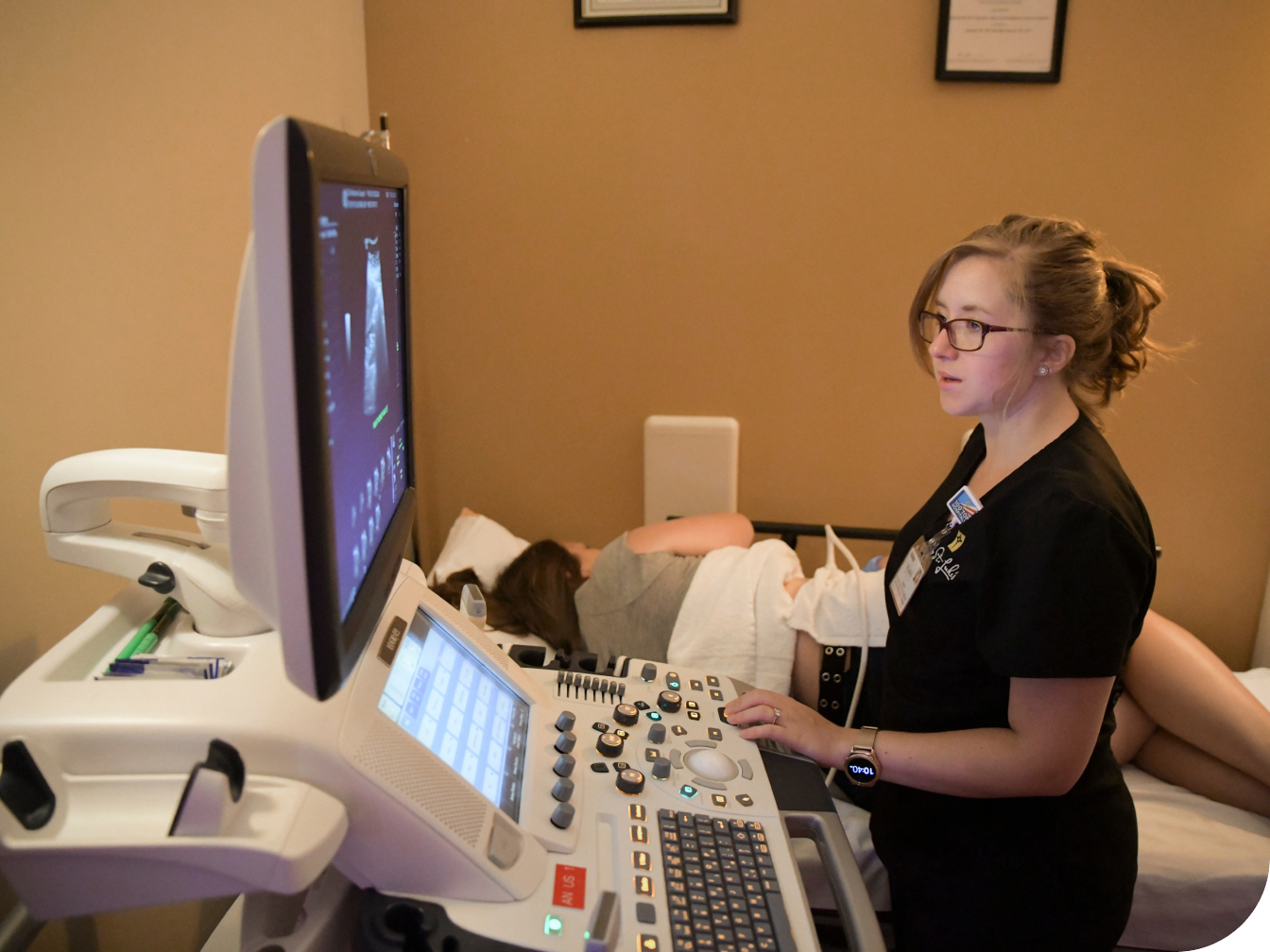
An ultrasound examination involves a small, handheld device called a transducer, which is placed on the skin over the area to be examined. The transducer emits sound waves that travel into the body, bounce off organs and structures, and then return to the transducer. A computer then converts these sound waves into real-time images displayed on a monitor. The procedure is painless and typically takes between 15 to 45 minutes. Some key applications of ultrasounds can include:
- Obstetric ultrasound: Essential for monitoring fetal growth and development, assessing pregnancy health, and detecting potential complications.
- Abdominal ultrasound: Used to examine organs like the liver, gallbladder, pancreas, kidneys, and spleen to diagnose conditions such as gallstones, kidney stones, and liver disease.
- Pelvic ultrasound: Evaluates the uterus, ovaries, and bladder, often used to diagnose gynecological conditions or assess bladder issues.
- Vascular ultrasound: Assesses blood flow in arteries and veins, helping to detect blood clots, blockages, or aneurysms.
- Breast ultrasound: Often used as a supplementary tool to mammography for further evaluation of breast abnormalities.
- Musculoskeletal ultrasound: Visualizes muscles, tendons, ligaments, and joints to diagnose tears, inflammation, or other injuries.
Why choose St. Luke’s for your ultrasound?
Choosing St. Luke’s for your ultrasound means selecting a facility that is equipped with advanced ultrasound technology and staffed by highly skilled professionals.
- Advanced ultrasound technology: We utilize state-of-the-art ultrasound machines that provide high-resolution images, ensuring accurate diagnoses.
- Expert radiologists and sonographers: Our board-certified radiologists and registered sonographers have extensive experience in performing and interpreting ultrasound examinations, providing precise and timely reports.
- Radiation-free imaging: Ultrasound is a safe imaging modality, particularly beneficial for pregnant women and children, as it does not involve ionizing radiation.
- Patient-centered care: We strive to make your ultrasound experience as comfortable and reassuring as possible, with clear communication and compassionate care.
Frequently asked questions about ultrasounds
An ultrasound, also known as sonography, is a medical imaging technique that uses high-frequency sound waves to produce real-time images of structures inside the body. It does not use radiation.
Ultrasound is used for a wide range of diagnostic purposes, including monitoring pregnancy, examining abdominal and pelvic organs, assessing blood flow, and evaluating musculoskeletal conditions.
Yes, ultrasound is considered very safe as it does not use ionizing radiation. It is a preferred imaging method for pregnant women and children.
The duration of an ultrasound examination typically ranges from 15 to 45 minutes, depending on the area being examined and the complexity of the scan.
Preparation for an ultrasound varies depending on the type of exam. For some abdominal ultrasounds, you may need to fast. For pelvic ultrasounds, you might be asked to drink water to fill your bladder. Specific instructions will be provided by your physician or our scheduling team.

Schedule your ultrasound today
When safe, detailed, and versatile imaging is essential for your diagnosis, trust St. Luke’s Radiology for your ultrasound needs. Our commitment to advanced technology, expert interpretation, and patient-centered care ensures you receive the highest quality diagnostic services. Don’t delay in getting the answers you need; precise ultrasound imaging is a vital step toward effective health management.