
Interventional Radiology

Minimally invasive imaging guidance.
At St. Luke’s Radiology, interventional radiology represents a cutting-edge medical subspecialty that combines advanced imaging technology with minimally invasive techniques to diagnose and treat a wide range of conditions. Our board-certified interventional radiologists are experts in using real-time imaging guidance—such as X-ray, ultrasound, CT, and MRI—to navigate tiny catheters and instruments within the body. This allows for targeted treatments that often replace the need for traditional open surgery, resulting in less pain, fewer risks, shorter hospital stays, and faster recovery times for patients. From treating vascular diseases and cancers to managing chronic pain and performing biopsies, interventional radiology offers innovative solutions that improve patient outcomes and quality of life. We are dedicated to providing state-of-the-art interventional radiology services, bringing you the benefits of advanced, less invasive medical care.
Understanding interventional radiology
Interventional radiology procedures are performed through small incisions, often no larger than a pinhole. Using live imaging, the interventional radiologist guides specialized tools to the exact site of the problem. This precision minimizes damage to surrounding healthy tissues and reduces the overall impact on the patient. Some key areas of interventional radiology can include the following:
- Vascular interventions: Treating peripheral artery disease (PAD), deep vein thrombosis (DVT), varicose veins, and uterine fibroids (UFE).
- Oncology interventions: Performing tumor ablations (e.g., radiofrequency, microwave, cryoablation), chemoembolization, and radioembolization for various cancers.
- Pain management: Offering nerve blocks, epidural injections, and vertebroplasty/kyphoplasty for spinal fractures.
- Biopsies and drainage: Image-guided biopsies for accurate diagnosis of suspicious lesions and drainage of fluid collections or abscesses.
- Women’s health: Procedures like uterine fibroid embolization (UFE) and pelvic congestion syndrome treatment.
- Men’s health: Treatments for conditions such as benign prostatic hyperplasia (BPH) and varicocele embolization.
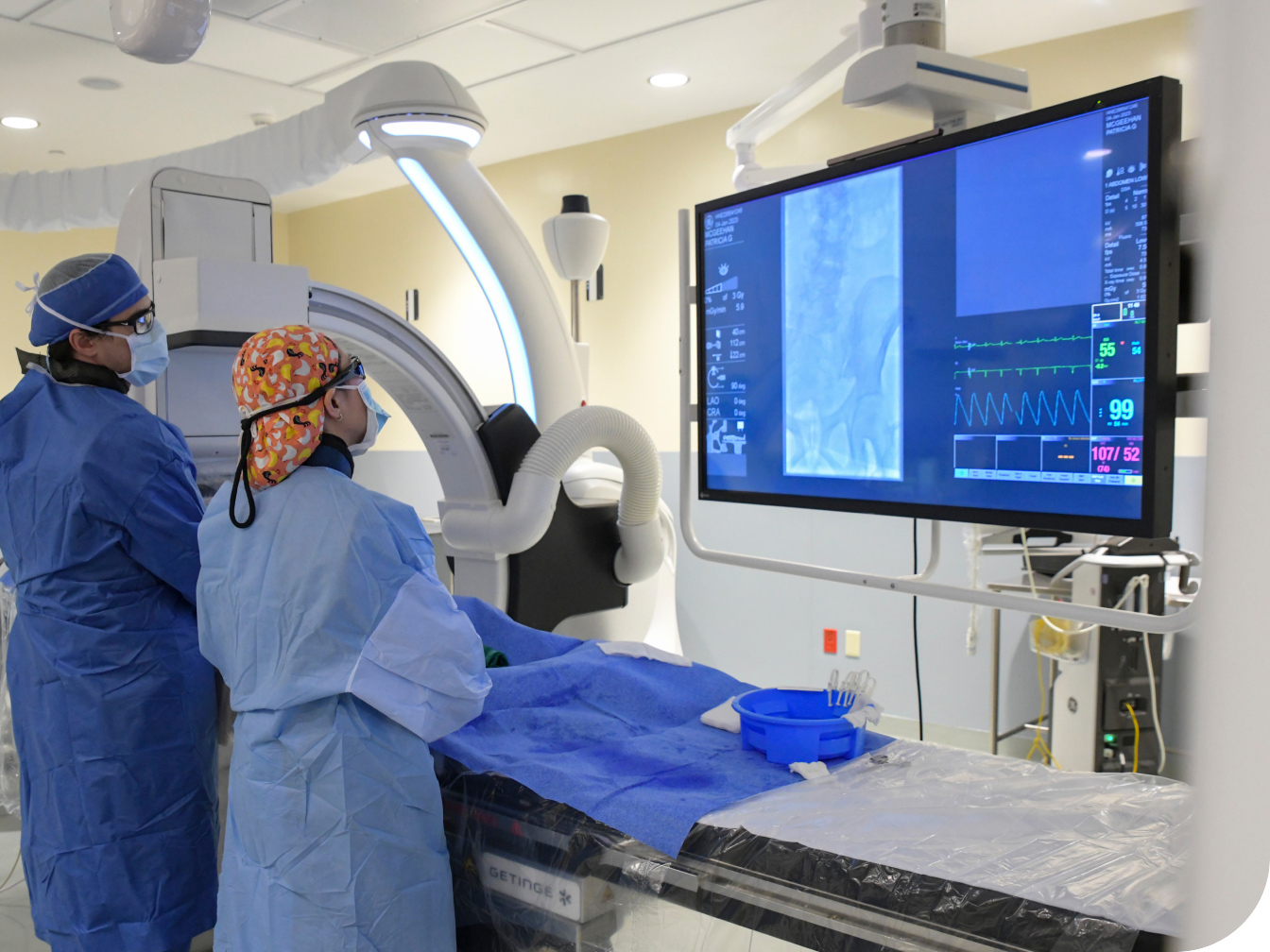
Uterine Artery Embolization (UAE)
Uterine Artery Embolization is a simple, non-surgical procedure that eliminates or dramatically shrinks uterine fibroids. Recovery usually requires just an overnight hospital stay. The procedure, an alternative to a hysterectomy, relieves the excessive bleeding and pain caused by fibroids. Studies show that 78 to 94 percent of women who have the Uterine Artery Embolization procedure experience significant or total relief of heavy bleeding, pain and other symptoms. Experienced physicians at St. Luke’s Hospital have been successfully performing Uterine Artery Embolization procedures for many years.
Why choose St. Luke’s for your interventional radiology needs?
Choosing St. Luke’s for interventional radiology means access to a highly skilled team and advanced facilities dedicated to providing the best possible outcomes. Our interventional radiologists are leaders in their field, committed to patient safety and comfort.
- Subspecialized expertise: Our interventional radiologists have advanced training and extensive experience in performing complex, minimally invasive procedures.
- State-of-the-art technology: We utilize the latest imaging equipment to ensure precise guidance and optimal treatment delivery.
- Collaborative approach: We work closely with your referring physicians and other specialists to develop a personalized treatment plan tailored to your specific needs.
- Patient-centered care: We prioritize your comfort and well-being, providing clear explanations and compassionate support throughout your procedure and recovery.
Frequently asked questions about interventional radiology
Interventional radiology is a medical specialty that uses image guidance (like X-ray, ultrasound, CT, or MRI) to perform minimally invasive procedures to diagnose and treat diseases throughout the body. These procedures are often alternatives to traditional surgery.
Interventional radiology can treat a wide range of conditions, including peripheral artery disease, uterine fibroids, various cancers (through tumor ablation or embolization), deep vein thrombosis, chronic pain, and more.
Most interventional radiology procedures are performed under local anesthesia, often with conscious sedation, meaning you will be comfortable and feel little to no pain during the procedure. Recovery is typically faster and less painful than open surgery.
Benefits often include smaller incisions, less pain, reduced risk of complications, shorter hospital stays, and faster recovery times compared to traditional open surgical procedures.
The best way to determine if an interventional radiology procedure is suitable for your condition is to consult with your physician. They can assess your medical history and recommend a consultation with an interventional radiologist at St. Luke’s.

Explore interventional radiology at St. Luke’s
If you are seeking effective, less invasive treatment options for a wide range of medical conditions, consider the benefits of interventional radiology at St. Luke’s. Our expert team is ready to provide you with advanced, image-guided care that promotes faster healing and improved quality of life. Contact us today to learn more about how interventional radiology can benefit you.