
P.E.T./CT Scan
Advanced positron emission tomography.

The power of PET scans.
At St. Luke’s Radiology, positron emission tomography (PET) scans represent a cutting-edge diagnostic tool that provides unique insights into the metabolic activity of cells and tissues. Unlike other imaging techniques that show anatomy, PET scans reveal how organs and tissues are functioning at a molecular level. This capability is invaluable for the early detection and precise staging of cancers, assessing the extent of heart disease, and diagnosing various neurological disorders. By using a small amount of a radioactive tracer, PET scans can highlight areas of abnormal cellular activity, often before structural changes are visible on other imaging modalities like CT or MRI. When combined with CT (PET/CT), as is often the case at St. Luke’s, the scan offers both anatomical and metabolic information, providing a comprehensive view for accurate diagnosis and treatment planning.
Understanding PET Scans
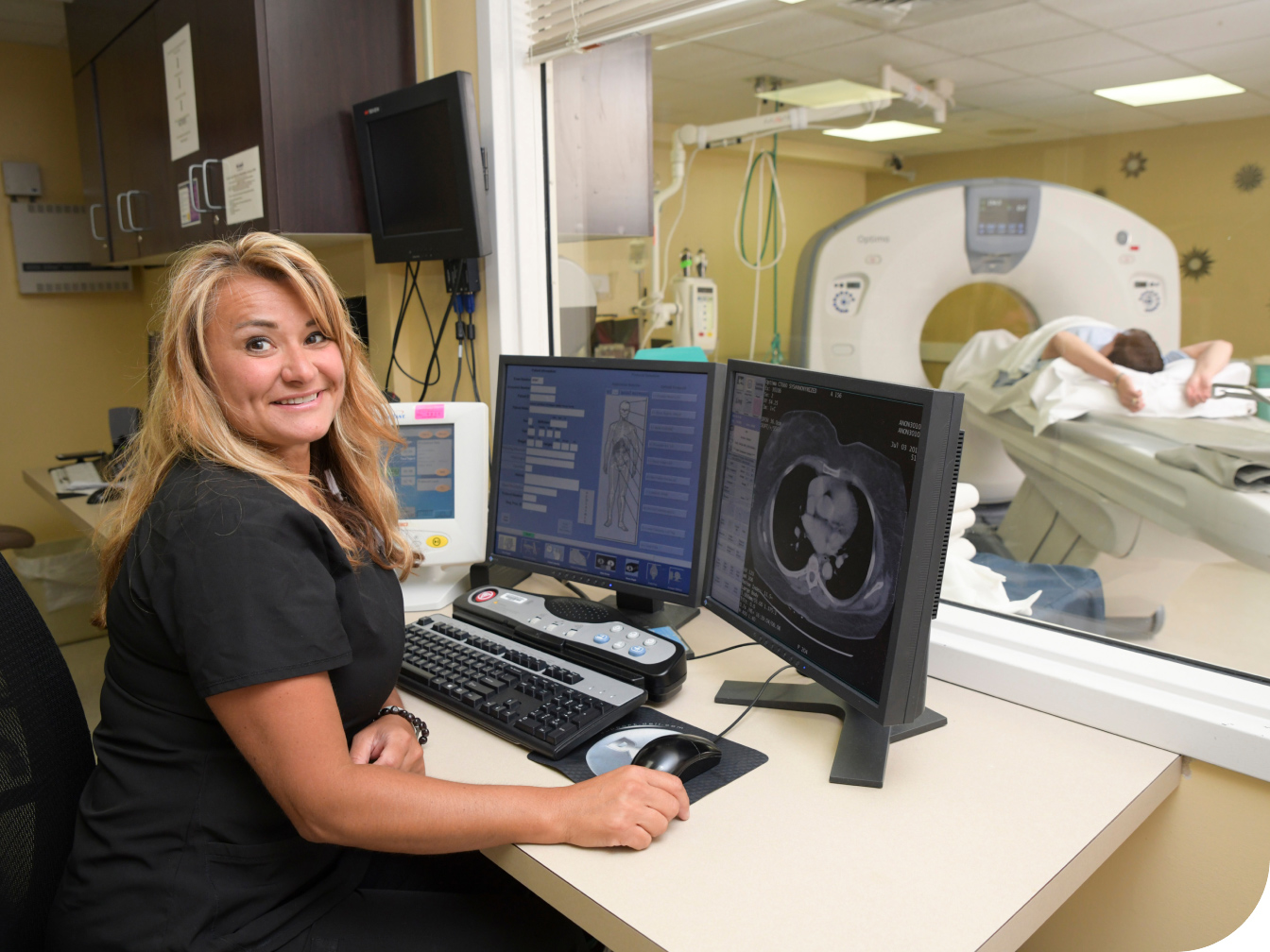
A PET scan involves injecting a small amount of a radioactive tracer, typically a glucose derivative (FDG), into your bloodstream. Cancer cells, heart cells, and brain cells are known to consume glucose at a higher rate than normal cells, making the tracer accumulate in these areas. After a short waiting period for the tracer to distribute, you will lie on a table that slides into the PET scanner. The scanner detects the energy emitted by the tracer, and a computer converts this information into detailed 3D images. Some key applications of PET scans include the following:
- Oncology: Detecting cancer, determining if cancer has spread (staging), assessing the effectiveness of cancer treatment, and detecting cancer recurrence.
- Cardiology: Evaluating blood flow to the heart muscle, identifying damaged heart tissue, and assessing myocardial viability.
- Neurology: Diagnosing Alzheimer’s disease, Parkinson’s disease, epilepsy, and other brain disorders by showing changes in brain activity.
- Infection and inflammation: Locating sites of infection or inflammation in the body.
Why choose St. Luke’s for your PET scan?
Choosing St. Luke’s for your PET scan means entrusting your care to a facility that combines state-of-the-art technology with a compassionate approach. Our radiology department is equipped with advanced PET/CT scanners and staffed by highly skilled professionals. Integrated PET/CT technology: Our advanced PET/CT scanners provide both metabolic and anatomical information in a single scan, leading to more precise diagnoses and treatment strategies.
- Expert radiologists and nuclear medicine physicians: Our board-certified specialists have extensive experience in interpreting PET scans, ensuring accurate and timely reports for your physician.
- Patient comfort and safety: We prioritize your comfort throughout the procedure and adhere to strict safety protocols for radioactive tracer administration and minimal radiation exposure.
- Collaborative care: Your PET scan results are seamlessly integrated into your overall healthcare plan, facilitating multidisciplinary discussions and informed decision-making among your care team.
Frequently asked questions about PET/CT scans
A PET (positron emission tomography) scan is an imaging test that uses a small amount of a radioactive tracer to show how your organs and tissues are functioning at a cellular level. It helps detect diseases at their earliest stages.
A CT scan provides detailed anatomical images (structure), while a PET scan provides functional images (metabolic activity). Often, they are combined into a PET/CT scan to give both structural and functional information in one comprehensive image.
PET scans involve a small amount of radioactive tracer, which is quickly eliminated from the body. The radiation exposure is minimal and considered safe for diagnostic purposes. Our team takes all necessary precautions to ensure your safety.
The entire PET scan process, including tracer injection and uptake time, can take between 1 to 3 hours. The actual scan time on the machine is typically 20-40 minutes.
Preparation usually involves fasting for several hours before the scan and avoiding strenuous exercise. Specific instructions will be provided by your physician or our scheduling team. It’s crucial to follow these instructions carefully for accurate results.

Schedule your PET scan today
For functional insights into your health that other imaging cannot provide, trust St. Luke’s Radiology for your PET scan needs. Our commitment to advanced technology, expert interpretation, and patient-centered care ensures you receive the highest quality diagnostic services. Don’t delay in getting the answers you need; precise PET imaging is a vital step toward effective health management.