
MRI (Magnetic Resonance Imaging)
Generating highly precise images.

The power of magnetic resonance imaging.
At St. Luke’s Radiology, magnetic resonance imaging (MRI) stands as a cornerstone of our advanced diagnostic capabilities, offering unparalleled detail in visualizing the body’s soft tissues, organs, and skeletal structures. Unlike X-rays or CT scans, MRI scans utilize a powerful magnetic field and radio waves, rather than ionizing radiation, to generate highly precise images. This makes it an exceptionally safe and versatile tool for diagnosing a wide array of conditions, particularly those affecting the brain, spinal cord, joints, muscles, and various internal organs. Our state-of-the-art MRI technology, combined with the expertise of our board-certified radiologists, ensures that you receive the most accurate and comprehensive diagnostic information, guiding effective treatment and care.
Understanding MRI scans
An MRI scan involves lying on a movable table that slides into a large, tube-shaped machine. Inside the MRI scanner, a strong magnetic field aligns the protons within your body’s water molecules. Radio waves are then briefly pulsed, knocking these protons out of alignment. When the radio waves are turned off, the protons realign, releasing energy signals that are detected by the MRI machine. A computer then translates these signals into detailed cross-sectional images.
- Neurological imaging: Essential for diagnosing conditions of the brain and spinal cord, including tumors, strokes, multiple sclerosis, and aneurysms.
- Musculoskeletal imaging: Provides detailed views of joints, ligaments, tendons, and muscles, crucial for diagnosing sports injuries, arthritis, and disc problems.
- Abdominal and pelvic imaging: Used to evaluate organs such as the liver, kidneys, pancreas, and reproductive organs, detecting tumors, inflammation, and other abnormalities.
- Vascular imaging: Magnetic resonance angiography (MRA) can visualize blood vessels to detect blockages, aneurysms, and other vascular issues without the need for invasive procedures.
- Breast MRI: Often used as a supplementary screening tool for women at high risk for breast cancer or for further evaluation of abnormalities found on mammograms.
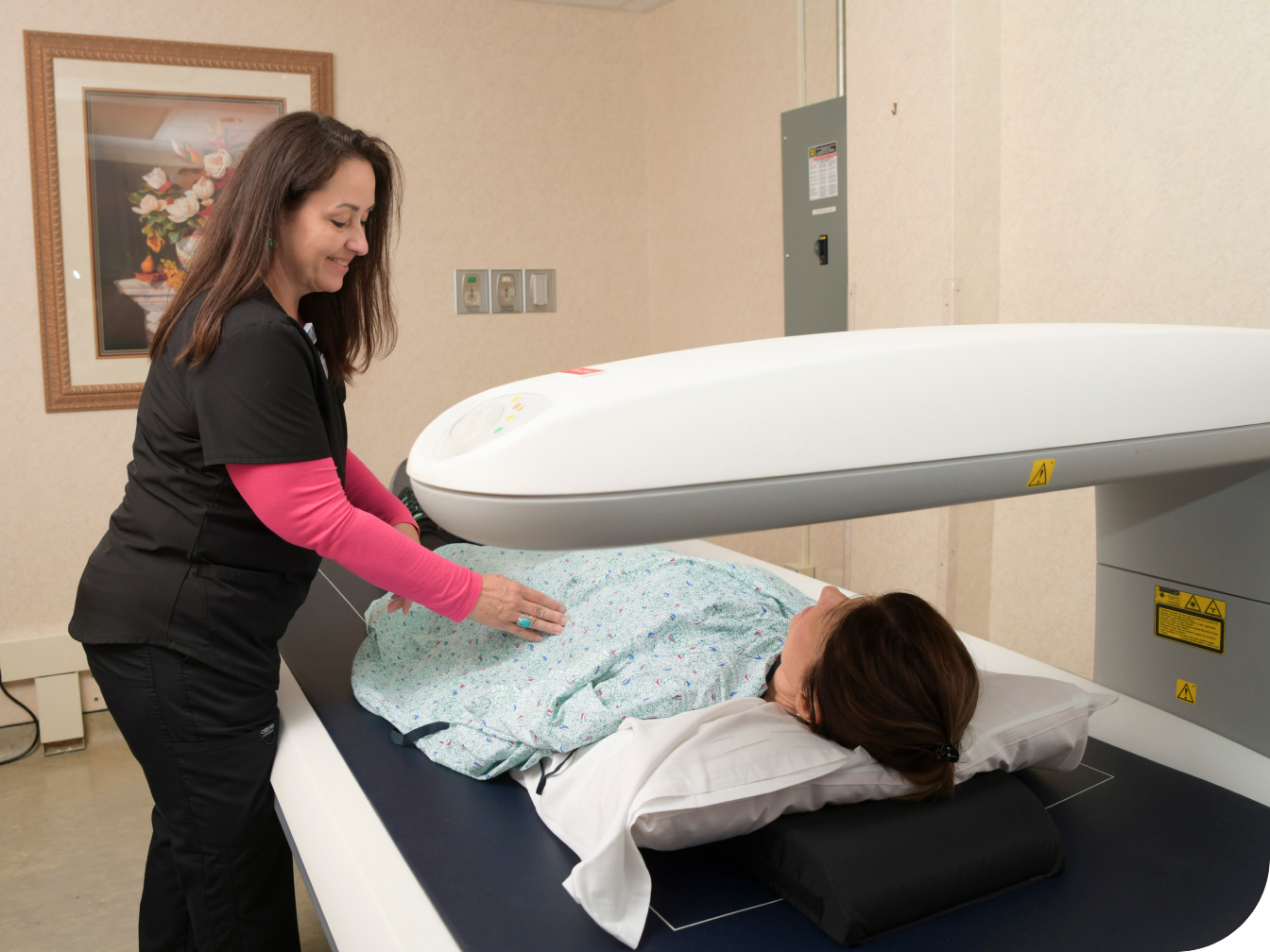
Breast MRIs: A vital tool for early detection
Breast MRIs offer a highly sensitive imaging technique that can detect subtle changes in breast tissue, often earlier than traditional mammograms. This advanced technology is particularly beneficial for women with dense breast tissue, which can make mammograms less effective.
If you're at high risk for breast cancer or have concerns about your breast health, talk to your doctor about whether a breast MRI is right for you.
Why choose St. Luke’s for your MRI scan?
Choosing St. Luke’s for your MRI needs means selecting a facility that prioritizes both diagnostic excellence and patient comfort. Our radiology department is equipped with advanced MRI technology and staffed by highly skilled professionals.
- Advanced technology: We utilize the latest MRI scanners, including open MRI options at some St. Luke’s MRI locations, to accommodate patients with claustrophobia or larger body sizes, ensuring a more comfortable experience.
- Expert radiologists: Our board-certified radiologists have subspecialty training in various areas, providing precise interpretation of your MRI images for accurate diagnoses.
- Patient-centered care: We understand that an MRI can be a daunting experience for some. Our team is dedicated to making your scan as comfortable and stress-free as possible, with clear communication and supportive care.
- Integrated diagnostics: Your MRI results are seamlessly integrated into your overall healthcare plan, ensuring that your care team has comprehensive information for informed decision-making.
Frequently asked questions about MRI scans
An MRI (magnetic resonance imaging) scan is a non-invasive medical imaging technique that uses a powerful magnetic field and radio waves to create detailed images of organs, soft tissues, bone, and virtually all other internal body structures. It does not use ionizing radiation.
An MRI can help your doctors diagnose certain diseases or injuries and allow them to monitor how well you have responded to treatment. You may need an MRI if your CT scan or X-ray doesn’t provide your doctor with enough information about your condition.
Yes, MRI scans are generally considered very safe as they do not use ionizing radiation. However, due to the strong magnetic field, it is crucial to inform your doctor and the technologist about any metal implants or devices in your body.
We can address claustrophobia in many ways.
- We offer patients sleep masks to help them avoid seeing the MRI during their exam.
- We allow patients to have screened family members go into the exam room with them during their scan.
- In many cases we can offer you music to listen to during the MRI to help you feel comfortable.
- You can always ask your healthcare provider to prescribe an anti-anxiety medication before the exam and see if you would be a suitable candidate for anesthesia.
- We will give you an emergency squeeze ball to hold in your hand to press if you feel scared or uncomfortable at any point during your MRI.
Yes, St. Luke’s offers open MRI options at select locations to provide a more comfortable experience for patients who may experience claustrophobia or for those with larger body sizes. Please inquire about availability when scheduling your appointment.
Exams can vary from 20 minutes to one hour depending on what you are having imaged. To better answer this question, please contact us.
Safety is our highest priority. The St. Luke’s staff verbally screens all patients again to ensure all screening questions are fully understood.
Prior exams are always helpful for comparative purposes. If an abnormality was present on the prior exam, your radiologist will be able to make a better diagnosis based on the rate of change, if any, from the prior exam.
You will lie on a movable table that slides into the MRI machine. The machine can be noisy, so you may be offered earplugs or headphones. It’s important to remain very still during the scan to ensure clear images.
If your doctor ordered the contrast for your exam, he or she feels it will be helpful for your specific symptoms. You can refuse the contrast, but it may limit the exam.
If your clothing has even a small amount of metal on or in it, there is a possibility of injury. Additionally, the smallest amount of metal can distort the MRI image, even if it is away from the area being imaged.
Please contact St. Luke’s Medical Records at 484-526-4719. St. Luke’s has an image-share platform, allowing us to electronically send them for you.

Schedule your MRI scan today
When detailed, radiation-free imaging is essential for your diagnosis, trust St. Luke’s Radiology for your MRI scan. Our commitment to advanced technology, expert interpretation, and patient comfort ensures you receive the highest quality diagnostic services. Don’t delay in getting the answers you need; precise MRI imaging is a vital step toward effective health management.