
Bone Mineral Density Measurement
Assessing the health of your bones.

Identifying hidden fractures with quality care.
Bone mineral density measurement, commonly performed using a DEXA (dual-energy X-ray absorptiometry) scan, is a crucial diagnostic tool offered at St. Luke’s Radiology. This advanced, non-invasive procedure is the most accurate way to assess the strength and health of your bones, playing a vital role in the early detection, diagnosis, and monitoring of osteoporosis and other conditions that affect bone density. A DEXA scan uses a very small dose of ionizing radiation to produce detailed images of your bones, typically focusing on the hip, spine, and forearm, areas most susceptible to fractures. By precisely measuring bone mineral content, we can identify individuals at risk for fractures before they occur, allowing for timely intervention and personalized treatment plans. At St. Luke’s, we are committed to proactive health management, and our DEXA scan services provide the clarity needed to protect your skeletal health.
What is a DEXA scan and why is it important?
A DEXA scan is a quick, painless, and highly effective outpatient procedure. It works by sending two different X-ray beams at the bones. The amount of X-rays absorbed by the bone and soft tissue is measured by a detector, and this information is then used to calculate your bone mineral density. The results are compared to healthy young adults (T-score) and age-matched individuals (Z-score) to determine your bone health status. Some key benefits of DEXA scans include:
- Early detection of osteoporosis: Identifies bone loss at an early stage, often before symptoms appear, enabling prompt treatment to prevent further deterioration.
- Fracture risk assessment: Helps predict your risk of future fractures, particularly in the hip and spine.
- Monitoring treatment effectiveness: Allows physicians to track changes in bone density over time, assessing how well osteoporosis treatments are working.
- Safe and non-invasive: The procedure involves minimal radiation exposure, comparable to natural background radiation, and is entirely painless.
Who should consider a DEXA scan?
While bone loss can affect anyone, certain individuals are at higher risk and should discuss DEXA screening with their physician. These include: Post-menopausal women, especially those under 65 with risk factors, or over 65 regardless of risk factors.
- Men over 70.
- Individuals with a history of fragility fractures.
- Those with certain medical conditions (e.g., rheumatoid arthritis, chronic kidney disease, hyperthyroidism) or taking medications (e.g., corticosteroids) that can lead to bone loss.
- Anyone with a family history of osteoporosis.
Why choose St. Luke’s for your BMD measurement?
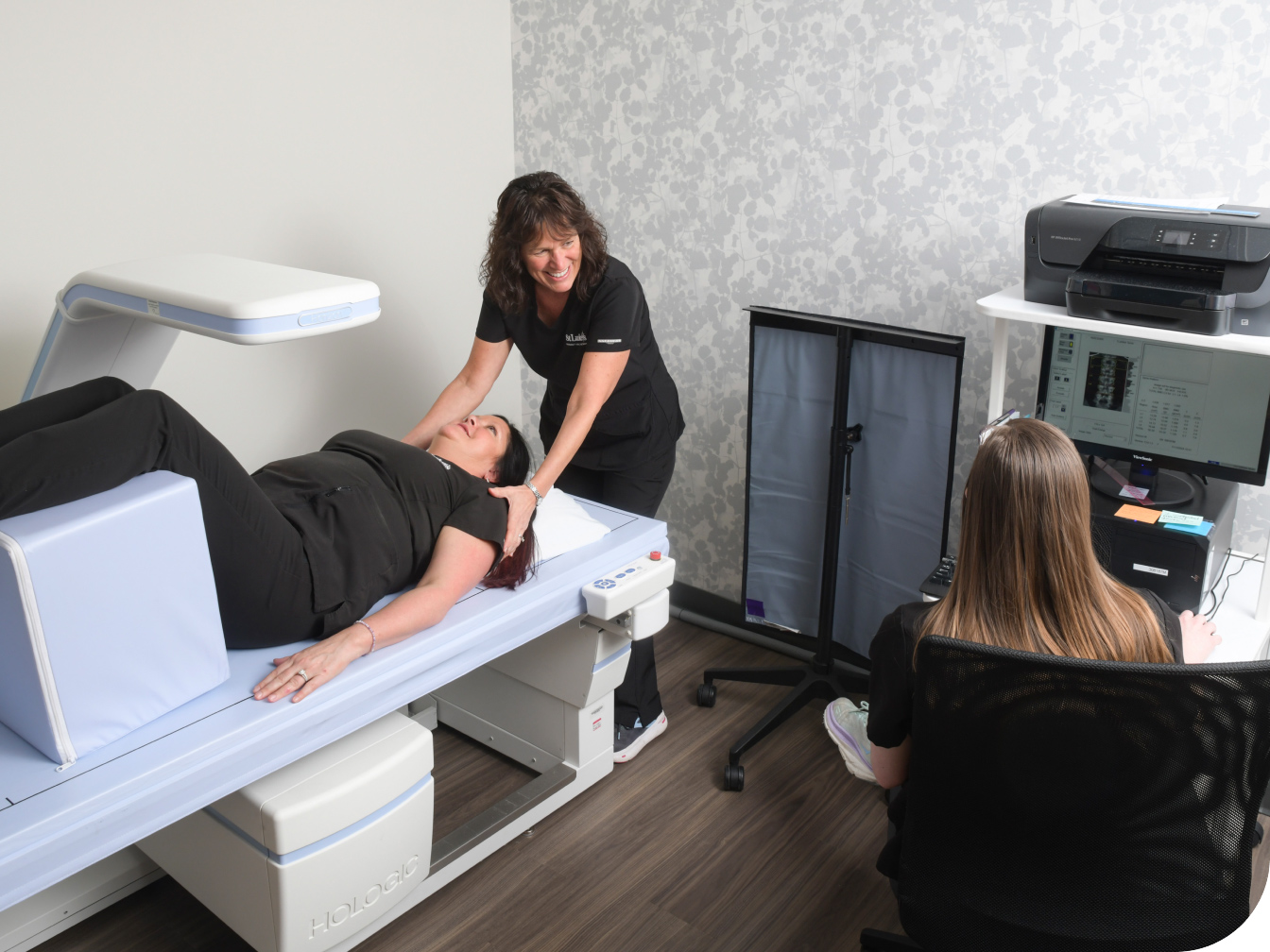
At St. Luke’s, we prioritize your comfort and ensure a seamless experience during your DEXA scan. The procedure typically takes only 10-20 minutes. You will lie comfortably on a padded table while a scanner arm passes over your body. Our experienced technologists will guide you through each step, answering any questions you may have.
- Accurate results: Our state-of-the-art DEXA equipment provides highly precise measurements for reliable diagnosis.
- Expert interpretation: Board-certified radiologists specializing in musculoskeletal imaging interpret your results, providing detailed reports to your physician.
- Convenient locations: With multiple St. Luke’s imaging centers throughout the Lehigh Valley and Warren County offering DEXA scans, you can find a location near you for easy access.
- Integrated care: We work closely with your primary care physician and specialists to ensure your bone health is part of a comprehensive care plan.
Frequently asked questions about DEXA Scans
A DEXA (Dual-energy X-ray absorptiometry) scan is a quick, non-invasive imaging test that measures bone mineral density, primarily in the hip, spine, and forearm. It is the most accurate method for diagnosing osteoporosis and assessing fracture risk.
Yes, DEXA scans are very safe. They use a very small amount of ionizing radiation, which is comparable to the natural background radiation you are exposed to daily. The benefits of early detection of bone loss far outweigh the minimal risks.
The actual scanning process is very fast, typically taking only 10-20 minutes to complete.
DEXA scans are generally recommended for post-menopausal women, men over 70, and individuals with specific risk factors for osteoporosis, such as a history of fractures, certain medical conditions, or long-term use of certain medications. Your physician can determine if a DEXA scan is right for you.
Generally, no special preparation is needed. You should avoid taking calcium supplements on the day of your exam. Wear comfortable clothing without metal zippers, buttons, or buckles. Inform your doctor if you are pregnant or have recently had another imaging test with contrast material.

Schedule your DEXA scan today
Don’t wait until a fracture occurs to assess your bone health. Early detection and management of bone loss is key to maintaining an active and independent lifestyle. Contact St. Luke’s Radiology today to schedule your bone mineral density (DEXA) measurement. Our team is ready to provide you with the insights you need for stronger bones and a healthier future.