Restoring breathing and quality of life.
A deviated septum is a common condition where the thin wall (nasal septum) between your nasal passages is displaced to one side, making one nasal passage smaller. For many, this condition causes no issues, but for others, it can lead to significant breathing difficulties, chronic stuffiness, and a reduced quality of life. At St. Luke's University Health Network, our Ear, Nose, and Throat (ENT) specialists provide expert diagnosis and personalized treatment, including surgical correction (septoplasty), to help patients in the Lehigh Valley breathe freely again.
Understanding deviated septums
The nasal septum is the wall of bone and cartilage that divides your nose into two separate nostrils. However, in an estimated 80% of people, the septum is off-center to some degree. When this deviation is severe, it can block one side of the nose and disrupt normal airflow, leading to a range of uncomfortable symptoms. A deviated septum can be a condition someone is born with, or it can result from an injury to the nose, such as from a sports accident, a fall, or a car crash. The natural aging process can also affect nasal structures and, in some cases, worsen a deviated septum over time.
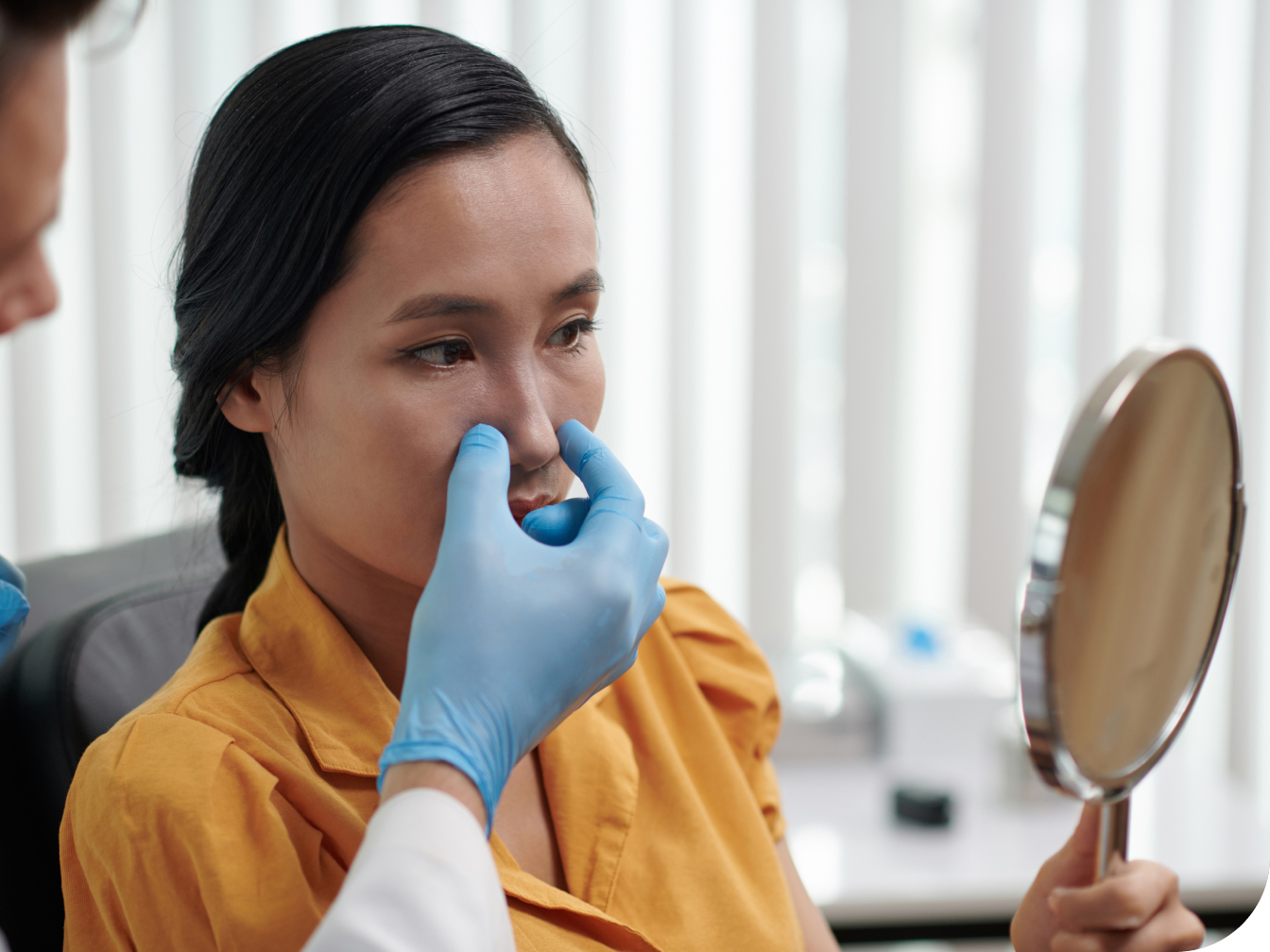
Symptoms of a deviated septum
While many people with a deviated septum have no symptoms, those with a significant deviation may experience:
- Difficulty breathing through one or both nostrils
- Nasal congestion or stuffiness
- Frequent nosebleeds
- Recurrent sinus infections
- Facial pain or pressure
- Noisy breathing during sleep
- Preference for sleeping on a particular side (due to discomfort)
- Reduced sense of smell
Surgical options for a deviated septum
Treatment for a deviated septum is tailored to the severity of symptoms and may involve medical management or surgical correction. For mild cases, medications can help reduce swelling and improve airflow, though they do not correct the structural deviation itself. When symptoms are significant or persist despite medical therapy, septoplasty is the definitive treatment. This outpatient surgical procedure straightens the nasal septum by reshaping or removing deviated cartilage and bone through the nostrils, improving nasal airflow and breathing. Septoplasty is highly effective and can often be performed alongside other procedures, such as sinus surgery or turbinate reduction, when needed.

Frequently asked questions about deviated septums
No, a septoplasty is a functional procedure performed to improve breathing by straightening the internal nasal septum. Rhinoplasty is a cosmetic procedure performed to change the external appearance of the nose. The two procedures can be performed at the same time if a patient desires both functional and cosmetic changes (this is called a septorhinoplasty).
Recovery is generally quick. You can expect some nasal stuffiness and mild discomfort for a few days after surgery. Most patients can return to work or school within a week, though strenuous activities should be avoided for 2-4 weeks. Your surgeon will provide detailed post-operative instructions.
It is very rare for the septum to deviate again after a successful septoplasty. The procedure provides a permanent correction to the structure of the septum.
No, there are no non-surgical methods to physically straighten a deviated septum. Medical treatments like nasal sprays and decongestants can only help manage the symptoms (like congestion) but cannot fix the underlying structural issue.
