Sarcoma and bone tumor care designed around you.
At St. Luke’s, care for sarcomas and bone tumors are built around precision, expertise, and preserving what matters most—your movement, function, and quality of life. Our Sarcoma, Soft Tissue, and Orthopedic Oncology Center of Excellence brings together specialists experienced in treating both benign and malignant tumors of the bone, muscle, and connective tissue. From diagnosis through treatment and recovery, your care team works together to tailor to your individual needs and goals. Having the right team matters—and we are here to guide you every step of the way.
Understanding sarcomas and bone tumors
Sarcomas are a group of cancers that can develop in the body’s bones, muscles, fat, nerves, blood vessels, and other connective tissues. Unlike many cancers that begin in organs, sarcomas can occur almost anywhere in the body and encompass more than 70 different subtypes. Because there are many different types of sarcomas, each person's diagnosis and treatment plan is unique. Some sarcomas grow slowly, while others may require more immediate treatment. From diagnosis through treatment, rehabilitation, and survivorship, our experienced team is committed to providing you coordinated, compassionate care every step of the way through a personalized care plan.
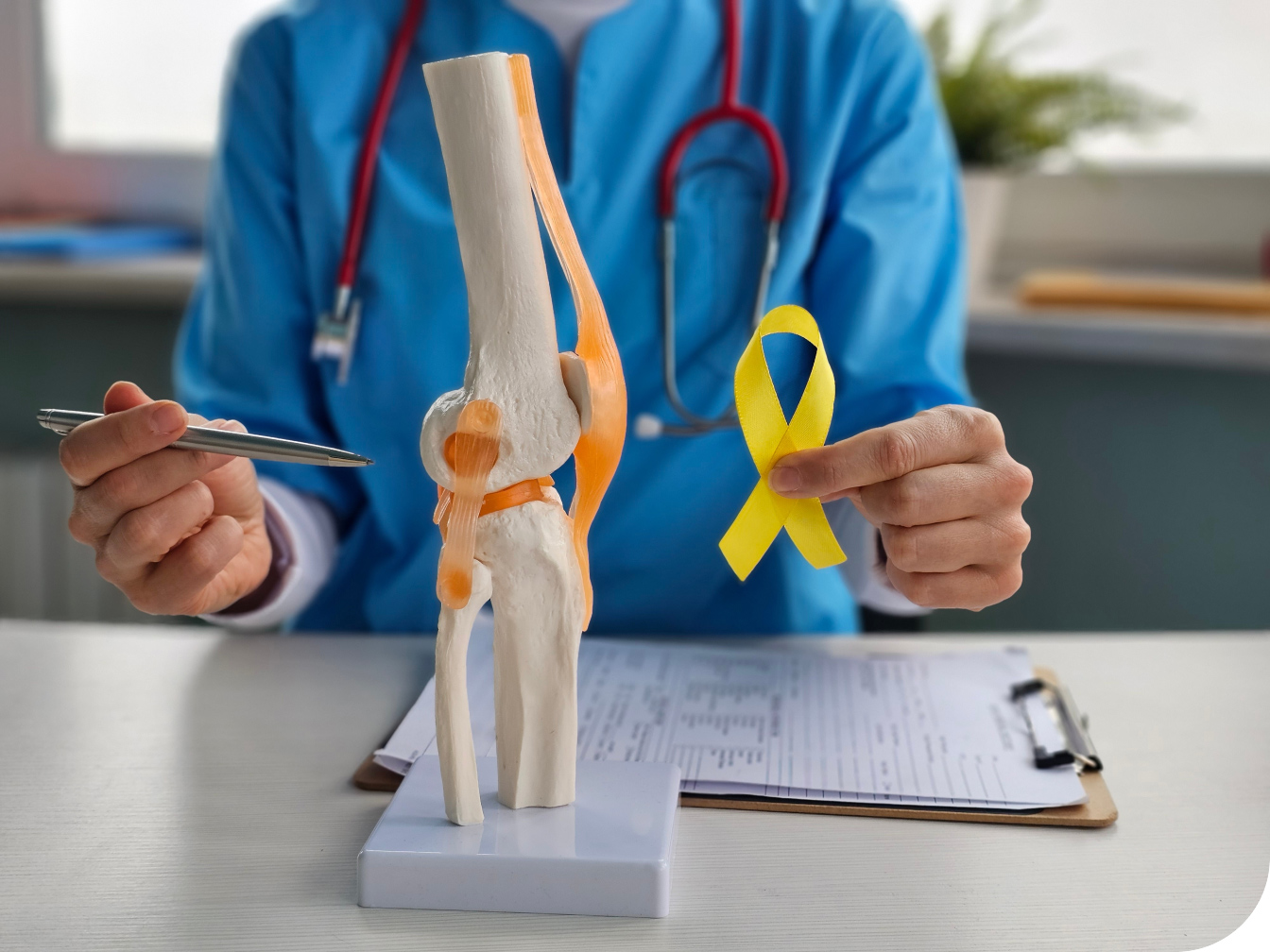
Bone cancer symptoms and diagnosis at St. Luke’s
Symptoms of a bone or soft tissue tumor can vary depending on the tumor’s size, location, and whether it affects nearby muscles, nerves, joints, or bones. Some tumors cause no symptoms initially and are discovered during imaging for another condition. Potential signs and symptoms may include:
- A lump, mass, or swelling that may increase in size over time
- Pain in the affected area, especially with activity or at night
- Limited range of motion or stiffness near a joint
- Weakness, numbness, or other nerve-related symptoms if surrounding nerves are affected
- Difficulty walking or performing daily activities
- Unexplained fractures or broken bones with minimal injury (more common with bone tumors)
If you notice a persistent lump, unexplained pain, or changes in mobility, it is important to seek medical evaluation. Our team uses a coordinated approach to accurately diagnose bone and soft tissue tumors and develop an individualized care plan. Diagnostic evaluation may include:
- Advanced Imaging: MRI, CT, X-ray, or PET scans to determine the tumor's size, location, and characteristics
- Biopsy and Pathology Review: To confirm the diagnosis and determine whether the tumor is benign or malignant
- Specialized Consultation: Collaborating with orthopedic oncology, surgical oncology, radiology, pathology, and other experts as needed
- Molecular and Genetic Testing: When appropriate, to help guide treatment recommendations
Our goal is to provide an accurate diagnosis, answer your questions clearly and compassionately, and create a treatment plan that helps you move forward with confidence.
Types & staging of bone cancers
Bone cancer can be primary (starting in the bone) or metastatic (spreading to the bone from another part of the body). The most common bone cancers include:
- Osteosarcoma: The most common primary bone cancer, originating in bone-forming cells.
- Chondrosarcoma: A cancer that develops in cartilage cells, most often in adults.
- Ewing Sarcoma: A rare tumor that most commonly affects children, adolescents, and young adults.
- Chordoma: A rare cancer that develops in the bones of the spine or base of the skull.
- Metastatic Bone Cancer: Cancer that has spread to the bone from another site, such as the breast, lung, prostate, or kidney.
Bone cancer staging: Staging describes the extent of the cancer and plays an important role in guiding treatment recommendations. Our specialists will clearly explain your tumor type, grade, and stage and work closely with you to develop a personalized treatment plan tailored to your specific needs.

Our philosophy of care
Sarcomas and bone tumors often require highly specialized care and careful coordination. Your care team may include orthopedic oncologists, medical oncologists, radiation oncologists, and rehabilitation specialists—all working together to develop a comprehensive treatment plan. This level of collaboration helps ensure your care is precise, thoughtful, and tailored to your specific diagnosis.
Expert, collaborative care for bone cancer
Meet Your Care Team
Your care may involve:
- Orthopedic Oncologists: Lead surgical planning and treatment
- Medical Oncologists: Manage systemic therapies
- Radiation Oncologists: Provide targeted radiation treatment
- Rehabilitation Specialists: Support recovery and return to function
Advanced bone cancer treatments
Treatment for sarcomas and bone tumors is highly individualized and often involves a multidisciplinary team of orthopedic oncologists, medical oncologists, radiation oncologists, radiologists, pathologists, and rehabilitation specialists. Your treatment plan is designed around the type of tumor, its location, stage, and your overall health and goals.
Treatment options may include:
- Surgery: Often with a focus on limb preservation whenever possible, to remove the tumor while maintaining function and mobility
- Radiation Therapy: Shrinks tumors before surgery, reducing the risk of recurrence after surgery or provides treatment when surgery is not an option
- Chemotherapy: For certain bone cancers and soft tissue sarcomas to destroy cancer cells and help prevent the spread of disease
- Targeted Therapy or Immunotherapy: When appropriate, based on the tumor's specific molecular or genetic characteristics
- Reconstructive Surgery and Rehabilitation: To restore movement, strength and quality of life following treatment
Throughout your care, our specialists work closely together to provide coordinated treatment that balances effective cancer control with preserving function, mobility, and quality of life.
Cancer clinical trials
Clinical trials offer patients access to cutting-edge, innovative treatments and therapies that are not yet widely available and can help advance cancer research. Through St. Luke's Cancer Clinical Trials, patients will be monitored by our expert teams, as well as have the opportunity to contribute to future breakthroughs in cancer care. Eligibility can vary by trial and may depend on your diagnosis, treatment history, and overall health. If you're eligible, you'll receive detailed information about the trial, including potential risks and benefits. Participation is always voluntary and your care team will support you every step of the way.

Palliative Care
Role: Provides relief from symptoms, pain, and side effects while supporting patients emotionally and physically during serious illness
Goal: To improve quality of life for patients and families at any stage of cancer by managing symptoms, reducing suffering, and offering supportive care alongside treatment
Rehabilitation & Functional Recovery
Role: Supporting mobility, strength, and independence
Goal: Helping patients return to daily activities
Oncology Social Work
Role: Emotional and practical support
Goal: Supporting patients and families through complex care
Nurse Navigation
Role: Coordinating care across multiple specialties
Goal: Creating a seamless patient experience
Frequently asked questions about bone cancer
A bone density test (DEXA scan) measures bone mineral density to screen for osteoporosis – it is not designed to detect cancer. If a DEXA scan reveals an unexpected focal lesion or unusual finding, your physician will typically order additional imaging such as MRI, CT scan, or bone scan to investigate further.
Bone cancer typically causes a deep, aching pain in the affected bone that may be intermittent at first by becomes constant over time. The pain often worsens at night or with physical activity and does not improve with rest or over-the-counter pain relievers—a key distinction from ordinary muscle soreness. Some patients also notice swelling tenderness, or a firm lump near the tumor site. If you are experiencing any of the above symptoms, call 484-503-HOPE today.
Most bone cancers are not hereditary. However, certain inherited genetic syndromes do increase the risk, including Li-Fraumeni syndrome, hereditary retinoblastoma, and multiple osteochondromatosis. If you have a family history of bone tumors or a known genetic syndrome, St. Luke’s Cancer Center offers genetic counseling and risk assessment.
Bone cancer pain that worsens at night is a well-recognized and clinically significant symptom – one of the features that distinguishes bone tumor pain from ordinary musculoskeletal pain. Contributing factors include reduced distraction from pain during rest, changes in blood flow and pressure within the bone, and the fact that inflammatory substances released by tumor cells may follow a circadian rhythm. Night pain that is persistent, unexplained and not relieved by rest should always be evaluated by a physician.

Beat Cancer With Us…
At St. Luke’s, our cancer patients benefit from all of that, plus an unparalleled level of support and compassion. You are not alone we are with you every step of the way. Whether you are newly diagnosed or seeking a second opinion, we are here to help.
You can easily find a specialist near you and learn more about our Cancer Center locations to begin your care journey.
Call St. Luke’s HopeLine – one number for all your needs: 484-503-HOPE.