Expert skin cancer care close to home.
Skin (cutaneous) oncology care at St. Luke's gives you access to early detection, expert diagnosis and advanced treatment for skin cancer. Finding skin cancer early can improve treatment options and outcomes. Our Skin Oncology Center of Excellence brings together specialists in dermatology, surgical oncology, medical oncology, and radiation oncology to care for patients with melanoma and other skin cancers. From diagnosis through treatment and follow-up care, St. Luke’s works together to create a care plan that fits your needs. Our goal is to provide expert care close to home, clear communication and support every step of the way.
Understanding skin cancer
Skin cancer is the most common type of cancer. Skin cancer develops when skin cells grow abnormally and out of control, forming malignant tumors. It primarily occurs on skin exposed to the sun, but can also form on areas not typically sun exposed. The main types of skin cancer include basal cell carcinoma, squamous cell carcinoma, melanoma (the most dangerous form), and other rare skin cancers.
Each type of skin cancer grows and behaves differently. At St. Luke's, we focus on identifying your cancer early and creating a treatment plan based on your diagnosis, health, and personal needs. Understanding the risks, recognizing early signs, and practicing sun safety are key to prevention and early detection.
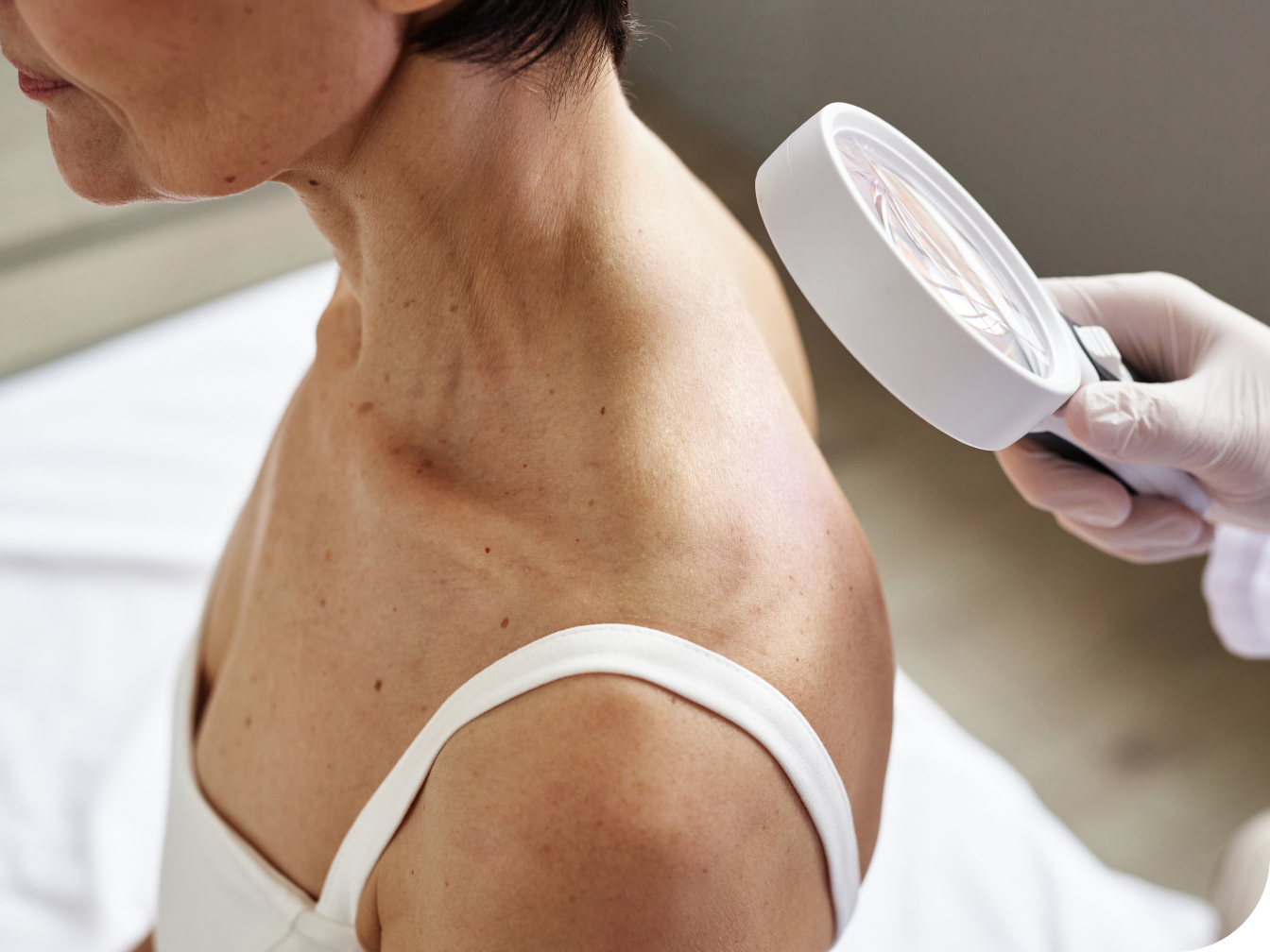
Skin cancer symptoms and diagnosis at St. Luke’s
*If you notice any suspicious spots or changes on your skin, consult a dermatologist immediately.
Many skin cancers can be seen on the skin. Early detection is critical for successfully treating skin cancer, especially melanoma, and allows for faster, more effective and often less invasive treatment. Regular self-examinations and professional skin checks are vital. Be aware of the ABCDEs of melanoma and other warning signs:
- Asymmetry: One half of a mole or birthmark does not match the other.
- Border: Edges are irregular, ragged, notched, or blurred.
- Color: The color is not the same all over and may include shades of brown or black, sometimes with patches of pink, red, white, or blue.
- Diameter: The spot is larger than 6 millimeters across (about ¼ inch – the size of a pencil eraser), although melanomas can sometimes be smaller.
- Evolving: The mole is changing in size, shape, or texture.
Other warning signs include a sore that doesn't heal, a spot with uneven color or irregular borders, redness or swelling beyond the border of a spot, change in sensation (itchiness, tenderness, or pain), change in the surface of a mole (scaliness, oozing, bleeding, or the appearance of a lump or bump), or a new mole.
Types & staging of skin cancers
There are three main types of skin cancer:
- Basal Cell Carcinoma (BCC): The most common type. Often appears as a flesh-colored, pearl-like bump or a pinkish patch of skin. Usually develops on sun-exposed areas like the head, neck, and arms. BCC grows slowly and rarely spreads.
- Squamous Cell Carcinoma (SCC): The second most common type. Often appears as a red firm bump, scaly patch, or a sore that heals and then re-opens. Typically found on sun-exposed areas but can occur elsewhere. SCC can grow deeper and sometimes spread.
- Melanoma: Less common but more dangerous because it's much more likely to spread if not caught early. Often develops in a mole or appears as a new dark spot. Can occur anywhere on the body.
Skin cancer staging: Staging (0-IV) describes the cancer's size, depth, lymph node involvement, and whether it has spread (metastasized). Melanoma staging is particularly complex and crucial for treatment planning. Basal cell and squamous cell carcinomas are often staged based on risk factors for recurrence.
Our philosophy of care
From your initial evaluation, your care is coordinated across specialties to provide a clear and timely path forward. Because skin cancer can involve multidisciplinary care, your team may include dermatologists, Mohs surgeons, dermatopathologists, surgical oncologists, plastic and reconstructive surgeons, medical oncologists, and radiation oncologists. These specialists work together to ensure accurate diagnosis, appropriate staging, and a treatment plan designed for you. Behind the scenes, your team is continuously collaborating, so your care feels seamless, efficient, and well-coordinated.
Expert, collaborative care for skin cancer
Multidisciplinary Case Conference Review
For more complex or advanced cases, your care team may review your diagnosis through a multidisciplinary conference (also known as a tumor board). This approach supports:
- A unified and coordinated treatment plan
- Input from multiple specialists
- Thoughtful decision-making for more complex cancers
You benefit from a team that is aligned and working together on your behalf.
Meet the Care Team
Your care may involve a range of specialists, including:
- Dermatologists & Mohs Surgeons: Lead early detection, diagnosis, and treatment of many skin cancers
- Dermatopathologists: Provide expert analysis of skin biopsies to ensure an accurate diagnosis and guide the most appropriate treatment plan
- Plastic & Reconstructive Surgeons: Restore appearance and function following skin cancer removal, with a focus on both healing and cosmetic outcomes
- Surgical Oncologists: Manage complex excisions and treatment planning for advanced disease
- Medical Oncologists: Provide systemic therapies (medicines that travel throughout the body), including immunotherapy and targeted treatments
- Radiation Oncologists: Provide radiation therapy when appropriate
This collaborative model ensures that care is both efficient and complete.
Advanced skin cancer treatments
Treatment depends on the type, depth, and location of the skin cancer. Many skin cancers can be treated with surgery alone, while others may require additional therapies.
Treatment options may include:
- Surgical Excision: Removing the tumor along with a margin of surrounding healthy skin.
- Mohs Surgery: A specialized surgical technique for removing skin cancer (primarily BCC and SCC) with very high cure rates, especially for cancers on the face, head, and neck. It involves removing cancer layer by layer and examining it under a microscope until no cancer cells remain, preserving as much healthy tissue as possible.
- Reconstructive Surgery: Restores both appearance and function by repairing areas affected by cancer removal using advanced techniques tailored to the size, location, and complexity of the defect.
- Radiation Therapy: Used for tumors that are hard to treat surgically, or after surgery to kill remaining cancer cells.
- Targeted Therapy & Immunotherapy: Advanced treatments, particularly for melanoma that has spread, targeting specific genetic mutations or boosting the immune system.
Your care team will help you choose the treatment option that offers the best results while also considering healing, appearance, and quality of life.
Cancer clinical trials
Clinical trials offer patients access to cutting-edge, innovative treatments and therapies that are not yet widely available and can help advance cancer research. Through St. Luke's Cancer Clinical Trials, patients will be monitored by our expert teams, as well as have the opportunity to contribute to future breakthroughs in cancer care. Eligibility can vary by trial and may depend on your diagnosis, treatment history, and overall health. If you're eligible, you'll receive detailed information about the trial, including potential risks and benefits. Participation is always voluntary and your care team will support you every step of the way.
Oncology Social Work
Role: Providing emotional support and guidance through diagnosis and treatment
Goal: Helping patients and families feel supported and informed
Nurse Navigation
Role: Coordinating care and ensuring timely follow-up
Goal: Simplifying the process and reducing uncertainty
Financial Advocates
Role: Helps patients understand the cost of care, assists with insurance coverage and authorizations, identifies financial assistance programs, and works to reduce out-of-pocket expenses
Goal: To minimize financial stress and ensure patients can access and complete their treatment
Reconstruction & Cosmetic Considerations
Role: Supporting healing and cosmetic outcomes following treatment
Goal: Helping patients feel confident in their recovery
Education & Prevention Support
Role: Providing guidance on skin protection and long-term monitoring
Goal: Supporting prevention and early detection moving forward
Nutrition & Wellness Support
Role: Supporting strength and recovery
Goal: Maintaining overall health during treatment
Palliative Care
Role: Provides relief from symptoms, pain, and side effects while supporting patients emotionally and physically during serious illness
Goal: To improve quality of life for patients and families at any stage of cancer by managing symptoms, reducing suffering, and offering supportive care alongside treatment
Frequently asked questions about skin cancer
Early skin cancers can appear as small changes: a new mole, a mole that changes, a pearly or waxy bump (BCC), a firm red nodule or flat scaly lesion (SCC), or a dark spot following the ABCDE rules (melanoma).
Sometimes. Itching, tenderness, or pain can be symptoms of skin cancer, although many skin cancers cause no discomfort.
Use the ABCDE rule: Asymmetry, irregular Border, uneven Color, Diameter larger than a pencil eraser, and Evolving (changing) appearance. Any suspicious mole should be checked by a dermatologist.
Limit sun exposure, especially during peak hours (10 am - 4 pm), wear protective clothing (hats, long sleeves), use broad-spectrum sunscreen (SPF 30+) daily, avoid tanning beds, and perform regular skin self-exams.
Basal cell carcinoma (BCC) is the most common, followed by squamous cell carcinoma (SCC). Melanoma is less common but more dangerous.

Beat Cancer With Us…
At St. Luke’s, our cancer patients benefit from all of that, plus an unparalleled level of support and compassion. You are not alone we are with you every step of the way. Whether you are newly diagnosed or seeking a second opinion, we are here to help.
You can easily find a specialist near you and learn more about our Cancer Center locations to begin your care journey.
Call St. Luke’s HopeLine – one number for all your needs: 484-503-HOPE.