
Breastfeeding Medicine
Nourishment for you and your baby.

Confident breastfeeding starts here.
At St. Luke's University Health Network, we recognize that breastfeeding is a beautiful and natural way to nourish your newborn and foster a deep bond. As a regional leader in Women's Health Services, we are committed to supporting new mothers on their breastfeeding journey by offering extensive educational resources and compassionate support services. We believe that confident breastfeeding starts with comprehensive guidance and a supportive environment.

The benefits of breastfeeding
Breast milk is often referred to as “liquid gold" due to its unparalleled nutritional and immunological benefits for infants. Beyond nutrition, breastfeeding offers numerous advantages for both mother and baby.
For Baby:
- Optimal nutrition: Breast milk provides the perfect balance of nutrients, antibodies, and enzymes tailored to your baby's needs, changing as they grow.
- Stronger immune system: Antibodies passed from mother to baby help protect against infections, allergies, and chronic diseases.
- Reduced risk of illnesses: Breastfed babies have a lower risk of ear infections, respiratory illnesses, diarrhea, and sudden infant death syndrome (SIDS).
- Healthy weight gain: Breastfeeding may help prevent childhood obesity.
- Enhanced brain development: Studies suggest a link between breastfeeding and improved cognitive development.
For Mother:
- Faster postpartum recovery: Breastfeeding helps the uterus contract, reducing postpartum bleeding and aiding in weight loss.
- Reduced risk of chronic diseases: Lowers the risk of breast and ovarian cancers, type 2 diabetes, and heart disease.
- Bonding: Promotes a unique emotional connection and bonding experience between mother and baby.
- Convenience and cost savings: Always available, at the right temperature, and free.


FREE Breastfeeding Support Group
Moms helping moms
Group held on the 2nd & 4th Tuesdays 11am-12:30pm at the St. Luke's Baby & Me Support Center Bethlehem
To register, call 484-526-BABY (2229)
The St. Luke’s Baby & Me Support Center acknowledges the many benefits of breastfeeding for infants, women and their families. We also understand that the journey isn’t always easy and can be filled with struggles. We are here to help!
- Latch, positioning, and other breastfeeding topics will be discussed with our certified lactation specialist
- If needed, schedule an individual appointment with our lactation specialist to receive personalized care for you and your newborn
- Bring your baby, talk to other moms and support each other on your breastfeeding journey

All babies benefit from human milk. But for medically vulnerable infants, human milk is even more critical. It can be lifesaving. When a mother’s own milk isn’t available, the next best option is pasteurized milk from carefully screened donors. Through our relationship with the Mid-Atlantic Mother’s Milk Bank, we are dedicated to providing safe human milk to all babies in need. As an official dispensary and depot site, the St. Luke’s Baby & Me Support Center in Bethlehem is able to accept and dispense donor milk to families in our community.
Donating milk can be a rewarding experience that positively impacts the health and well-being of the families in our region.
Breastfeeding tips
Planning to breastfeed your baby? Learning and researching a few things ahead of time can have a positive impact on your success! If you have any other questions or concerns as you plan to breastfeed, please reach out to us at Baby & Me! Our International Board-Certified Lactation Consultants (IBCLCs) can help!
HELPFUL REFERENCE GUIDES
Breastfeeding Begins Before Birth | Lactation Education Resources picture_as_pdf
Five Keys to Successful Breastfeeding | Lactation Education Resources picture_as_pdf
It's never too early or too late to seek help. If you're experiencing pain, latch difficulties, concerns about milk supply, or simply want reassurance, a lactation consultant can provide invaluable support.
Generally, most foods are safe to eat while breastfeeding. A balanced diet is recommended. If you notice your baby reacting negatively after you eat certain foods, discuss it with your health care provider or lactation consultant.
Any time you feel baby is interested in eating! We recommend feeding baby “on demand” especially in the early postpartum days. When feeding the baby based on his or her schedule, you are more likely to have active and effective feedings.
Helping your baby latch takes time and practice. Achieving a deep latch is the key to effective and comfortable breastfeeding. If your baby is having trouble latching or is not feeding effectively, or if latch is painful, please call our office to schedule an appointment with an International Board-Certified Lactation Consultant (IBCLC).
VIDEO RESOURCES
Attaching Your Baby at the Breast - Watch Video >
What adjustments make early breastfeeding easier? - Watch Video >
HELPFUL REFERENCE GUIDES
Positioning & Latch: Baby-Led Latching | Lactation Education Resources picture_as_pdf
Positioning & Latch: Mother-Led Latching | Lactation Education Resources picture_as_pdf
A good latch is just one piece of the puzzle to ensure your baby is getting enough to eat. It is important to also be aware of signs that your baby is feeding effectively. Some things to look for include gentle suction felt when baby is latched, regular swallows which you can note with a soft “kah” sound regularly as baby is sucking, and feeling the breasts have softened after baby is finished. If you are feeling these things are not being achieved in your feeding sessions, or baby is not content after most feedings, please call our office to schedule an appointment with an IBCLC.
VIDEO RESOURCES
How to tell if your baby is actually drinking - Watch Video >
HELPFUL REFERENCE GUIDES
Signs of a Good Feeding | Lactation Education Resources picture_as_pdf
Guidelines of a Good or Poor Feeding | Lactation Education Resources picture_as_pdf
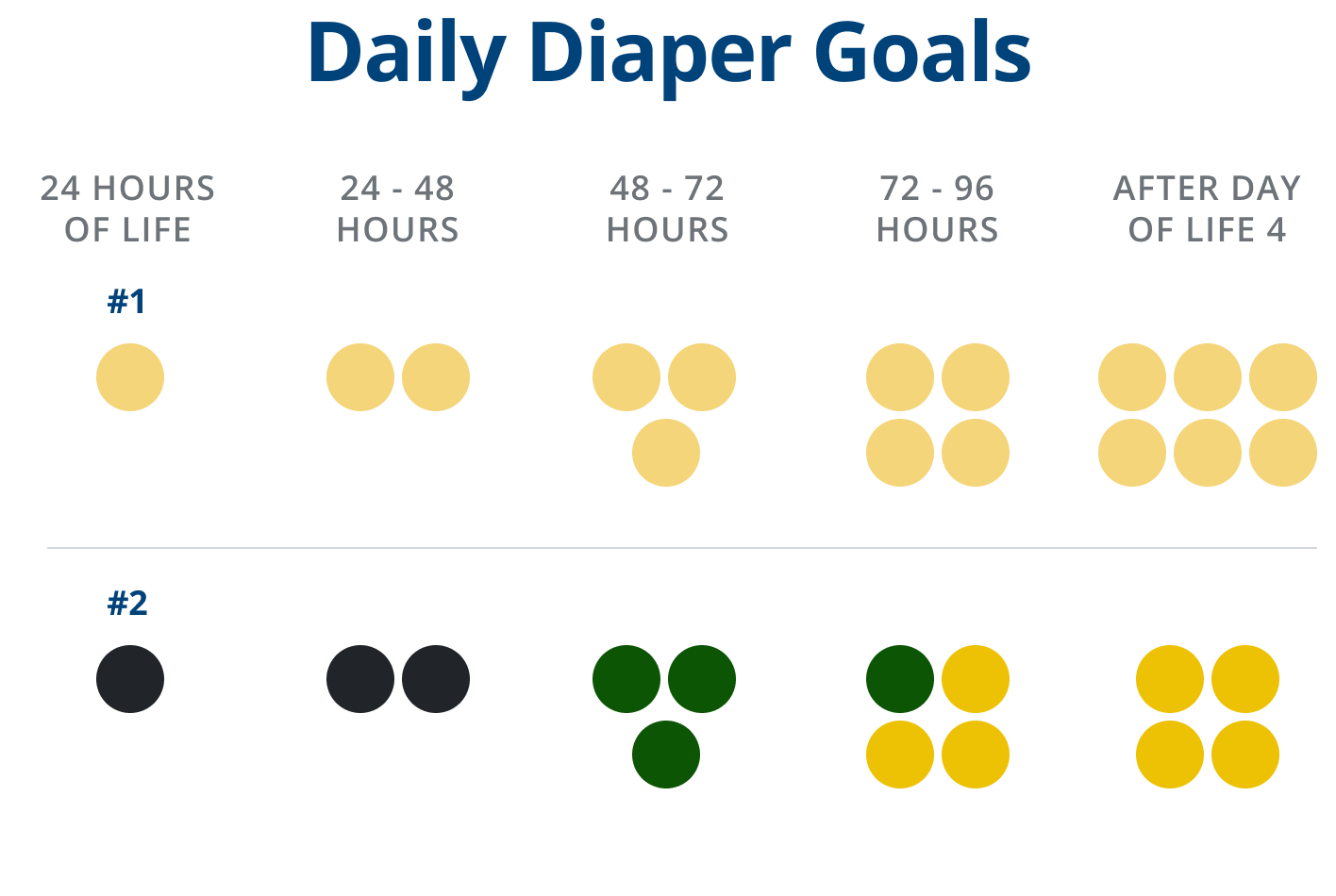
Focusing on what is coming out can help to give you more confidence about baby's intake. The first 24 hours of life expected output is much less than you may think! The goal is to see a minimum of 1 wet diaper and 1 soiled diaper that first day. This will be the black tarry poop known as meconium. This is what has been built up by the baby in utero and may last until three days of life, but by day 4 it should be turning green or yellow. By day of life 4 and beyond baby should be having consistent output –end goal of 6 wet and 2-3 soiled diapers minimum per day!
If you are concerned that your baby is not peeing or pooping as much as they should be, please call to schedule an appointment with an International Board-Certified Lactation Consultant (IBCLC).
Engorgement is common in the first week after delivery. Assuring that your baby is latching and feeding effectively and frequently is key to resolving engorgement. If engorgement is not managed by feedings, these tips should help until you can speak with one of our lactation consultants:
VIDEO RESOURCES
The Basics of Breast Massage and Hand Expression - Watch Video >
HELPFUL REFERENCE GUIDES
Breast Engorgement | Lactation Education Resources picture_as_pdf
Some nipple tenderness is common for the first week or so while breastfeeding, but pain and visible damage of the nipples is not normal. Commonly, nipple pain is the result of your baby not latching correctly but sometimes, it could indicate that your baby is having trouble suckling effectively. If you are experiencing pain or nipple damage, please call our office to schedule an appointment with an International Board-Certified Lactation Consultant (IBCLC).
Hard shells, silver cups, APNO are not the best choice for treating sore/damaged nipples. Using a good quality nipple ointment, covered by a soft, non-stick dressing can aid healing and soothe.
HELPFUL REFERENCE GUIDES
Painful Nipples | Lactation Education Resources picture_as_pdf
If your baby is having trouble latching, or is not getting enough milk while feeding at the breast, hand expression and using your pump can help you continue to provide milk for your baby. It is important to review the user manual for your pump prior to use. Your goal is to express enough milk to feed your baby or to relieve discomfort. It is important to avoid expressing large amounts of “extra” milk to avoid creating new problems. If you are not having success with hand expression or pumping, please call our office to speak with one of our International Board-Certified Lactation Consultants (IBCLC).
If your baby needs supplementation, you can feed your expressed milk from a cup, a spoon or using paced bottle feeding technique.
VIDEO RESOURCES
How to Pump & Store Breast Milk - Watch Video >
Cup Feeding - Watch Video >
Finger Feeding Supplementation Method - Watch Video >
Paced Bottle Feeding an Infant - Watch Video >
Paced Bottle Feeding an Infant – Spanish - Watch Video >
Fitting Pump Flanges - Watch Video >
Lymphatic Massage for the Breast During Pregnancy and Lactation - Watch Video >
Manual Expression of Breastmilk - Watch Video >
Rolling Out a Flat Nipple - Watch Video >
Sandwich Hold & Asymmetric Latch - Watch Video >
Spoon Feeding Breastmilk to an Infant - Watch Video >
HELPFUL REFERENCE GUIDES
Hand Expression | Lactation Education Resources picture_as_pdf
Hands-On Pumping | Lactation Education Resources picture_as_pdf
Paced Bottle Feeding | Lactation Education Resources picture_as_pdf
If for any reason you have extra expressed breastmilk, you certainly can save it for another time! Milk storage guidelines are available to help guide you on how to best save, freeze, thaw, and warm breast milk. Saving small volumes of milk can help you feel prepared for times when you may not be with your baby or as you plan to return to work. Keep in mind that a little often goes a long way. No need to save large volumes of milk, instead plan to have a few additional ounces available for that “rainy day” or only an extra day or so’s worth of milk ahead for baby.
HELPFUL REFERENCE GUIDES
Storage and Handling of Breastmilk | Lactation Education Resources picture_as_pdf
Returning to work and continuing to breastfeed may seem overwhelming but it is entirely possible if that is a parent’s goal! We are always happy to discuss return to work plans and help you feel prepared as you transition back to work after having your baby. If you’d like support with deciding which breast pump is best for you, how to save and store milk, how much milk you need to save (hint: it is probably less than you think!), how often to pump when away from your baby, how much milk baby needs when with another caregiver, etc, please don’t hesitate to schedule a “back to work” preparation visit with us!
HELPFUL REFERENCE GUIDES
The Employed Breastfeeding Mother | Lactation Education Resources picture_as_pdf
Tips for the Day Care Provider of a Breastfeeding Baby | Lactation Education Resources picture_as_pdf
Tongue tie is a “buzz word” in the parent/child heath world, but what does it mean? Saying a newborn is “tongue tied” is often referring to a baby who is not using his or her tongue effectively or appears to have a short band of skin under his or her tongue. If you have been told that your baby has tongue tied or if you have concerns about this for any reason, please reach out to schedule a visit with us. Our International Board-Certified Lactation Consultants (IBCLC) are trained to properly evaluate infant oral function and refer to therapies or our Breastfeeding Medicine providers if further support is indicated.
HELPFUL REFERENCE GUIDES