Understanding a sensitivity compared to an allergy.
Accurate treatment begins with an accurate diagnosis, which is why St. Luke’s is committed to providing comprehensive, cutting-edge allergy testing tailored to each patient’s unique needs. Our allergy specialists are able to precisely identify the specific substances triggering an individual’s symptoms, whether they stem from common environmental allergens like pollen and pet dander or more complex sensitivities such as food allergies. This thorough, personalized approach not only helps uncover the root cause of allergic reactions but also guides the development of targeted treatment plans, empowering patients to better manage their symptoms, reduce exposure to triggers, and improve their overall quality of life.
How are allergies tested?
At your appointment, your allergist will check your vital signs and review any other necessary medical information they need such as lifestyle habits, recent activities and severity, or relation to possible allergen exposure. Depending on the type of suspected allergy, your provider will perform specific tests to confirm your specific allergy. Skin tests are the most common allergy testing procedure. This can verify the difference between a sensitivity and a true food allergy. If you have symptoms of both allergies and asthma, you’ll likely need additional tests like spirometry to check your lung function.
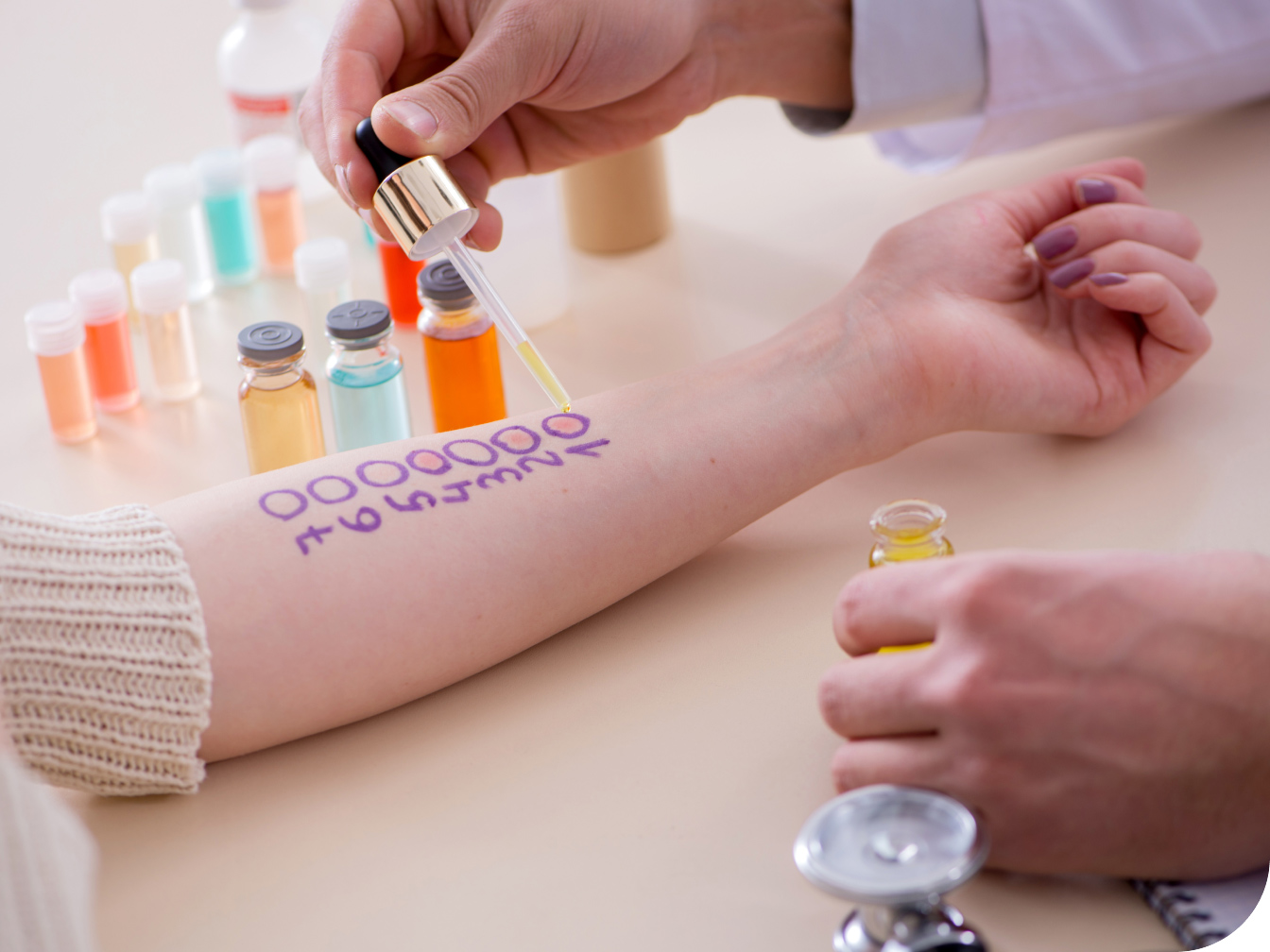
Types of allergy tests we offer
Skin Prick Testing (Scratch Test)
This painless test is typically the first step in determining the right treatment plan for you. In this test, your doctor places very small quantities of a suspected allergen into tiny punctures on your skin with a slight prick. If the skin shows a reaction, that confirms the allergy. It is fast, minimally invasive, and provides results in about 15-20 minutes. Testing can be performed to common allergens such as pollens, molds, dust mites, animal dander, insects, various foods and some medications such as penicillin. The severity of the reaction is determined by the size of the wheal.
Intradermal Testing
Generally performed if the skin prick test is inconclusive, and the patient has a strong history of potential allergies. A small amount of the allergen is injected under the first layer of the skin and the results are read and measured after 15 minutes as well.
Allergy Patch Testing
Specifically used to diagnose contact dermatitis by applying patches containing various allergens to the back for 48 hours. These can include substances such as lotions, cosmetics, metals and hair dyes. Patches with specific allergens are placed on the patient’s back for 48 hours. At 48 hours, the patches are removed and the skin is examined for any signs of rash or irritation. During this time, you should avoid getting the back wet and any activities that may cause sweating. A final review of the skin may also take place after 72 hours to look for a more delayed reaction.
Blood Testing (Specific IgE)
Used when skin testing is not possible due to severe skin conditions or certain medications.
Supervised Oral Food Challenge
In an oral food challenge, you or your child eats a food that’s a suspected allergen in very controlled amounts under medical supervision.
