
Clinical Cardiac Electrophysiology Fellowship
Overview
St. Luke’s University Health Network is a non-profit, regional, fully-integrated, nationally recognized network providing services at 16 campuses and more than 350+ outpatient sites in Lehigh, Northampton, Carbon, Schuylkill, Bucks, Montgomery, Berks, Monroe, and Luzerne counties in Pennsylvania and Warren and Hunterdon counties in New Jersey. There is an incredibly diverse patient population within the communities served.
The ACGME-accredited Clinical Cardiac Electrophysiology (EP) Fellowship offers two years of advanced subspecialty training for physicians who have completed an approved clinical cardiology fellowship. Located in Bethlehem, Pennsylvania, the program serves as the tertiary center for a large health network.
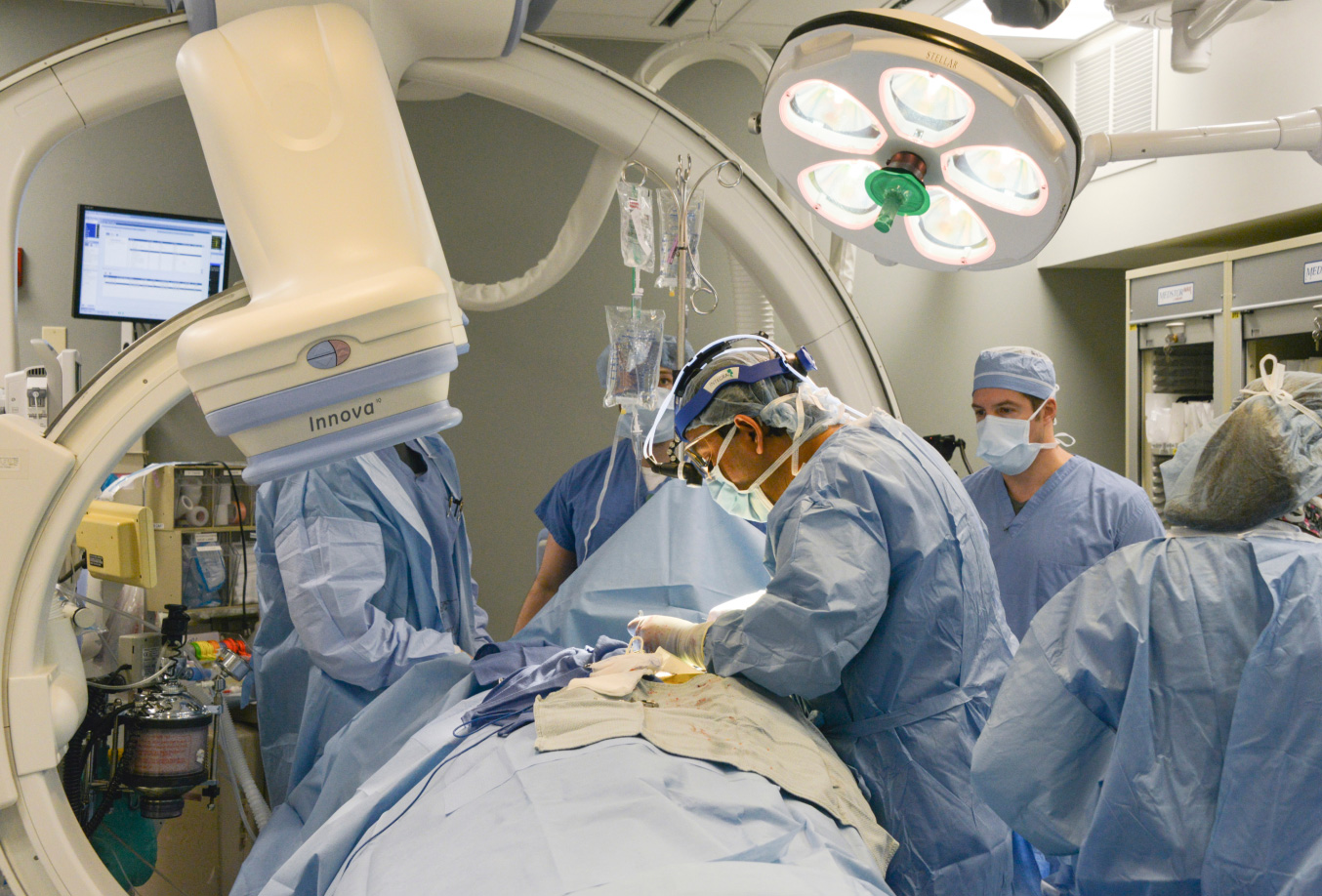
Fellows gain a dynamic mix of high-level clinical experience and comprehensive exposure to the field. A wide range of complex cases is funneled to the Bethlehem site via ambulance and helicopter transport, providing unparalleled opportunities in advanced electrophysiology and cardiovascular care.
Application Requirements
The EP Fellowship is currently filled through June 2028. We will be accepting applications for the Fellowship July 2028-30 through the Electronic Residency Application Service (ERAS). The deadline to apply is TBD and interviews will be by invitation only.
Minimum Eligibility - Completion of an ACGME-accredited Clinical Cardiology Fellowship, in good standing.
Questions? Please feel free to contact Felica Cabrera, Program Specialist, Electrophysiology Fellowship, at 484-526-4011 or send her a message.
Curriculum
Core curriculum will include a rotating conference schedule given weekly in our conference room, with protected time weekly on Wednesday mornings for one hour, before the start of clinical EP cases and after the conference, so that all EP faculty can attend. General cardiology fellows, advanced practitioners, and allied professionals rotating in EP will be invited to attend.
The Core Conference for Electrophysiology will rotate as follows:
- Case-based review of pertinent cases, including applicable intracardiac tracings and maps presented by EP fellows, followed by evidence-based review of pertinent literature (given every other week for one hour).
- Core curriculum didactics to cover all major topics pertinent in EP care; will be based on topics as outlined in HRS Board Review (given every other week) and the HRS Statement on Advanced Training in Clinical Electrophysiology; 1 hour
- Journal Club – monthly for 1 hour
- Morbidity and Mortality Rounds – Quarterly, 1 hour
The General Cardiology Fellowship has a Core Curriculum in Electrophysiology lecture given twice a month, which goes over core EP topics. The EP Fellow will participate in this by attending, as well as giving lectures. There is also a Case Conference series and Journal Club hosted by the General Cardiology fellowship. The EP Fellow will be given the opportunity to attend and participate, especially when topics are relevant to Electrophysiology.
PGY7 Block
4 weeks block, 52 weeks per year
| Site | Rotation Name | % EP Lab/Inpatient Consults |
% Outpatient Clinic | % Research / Didactics / Conferences |
|
|---|---|---|---|---|---|
| 1 | Bethlehem Campus | EP Lab - Consults | 80% | 10% | 10% |
| 2 | Bethlehem Campus | EP Lab - Consults | 80% | 10% | 10% |
| 3 | Bethlehem Campus | EP Lab - Consults | 80% | 10% | 10% |
| 4 | Bethlehem Campus | EP Lab - Consults | 80% | 10% | 10% |
| 5 | Bethlehem Campus | EP Lab - Consults | 80% | 10% | 10% |
| 6 | Bethlehem Campus | EP Lab - Consults | 80% | 10% | 10% |
| 7 | Bethlehem Campus | EP Lab - Consults | 80% | 10% | 10% |
| 8 | Bethlehem Campus | EP Lab - Consults | 80% | 10% | 10% |
| 9 | Bethlehem Campus | EP Lab - Consults | 80% | 10% | 10% |
| 10 | Bethlehem Campus | EP Lab - Consults | 80% | 10% | 10% |
| 11 | Bethlehem Campus | EP Lab - Consults | 80% | 10% | 10% |
| 12 | Bethlehem Campus | EP Lab - Consults | 80% | 10% | 10% |
| 13 | Bethlehem Campus | EP Lab - Consults | 80% | 10% | 10% |
PGY8 Block
4 weeks block, 52 weeks per year
| Site | Rotation Name | % EP Lab/Inpatient Consults |
% Outpatient Clinic | % Research / Didactics / Conferences |
|
|---|---|---|---|---|---|
| 1 | Anderson Campus | EP Lab - Consults | 80% | 10% | 10% |
| 2 | Anderson Campus | EP Lab - Consults | 80% | 10% | 10% |
| 3 | Anderson Campus | EP Lab - Consults | 80% | 10% | 10% |
| 4 | Anderson Campus | EP Lab - Consults | 80% | 10% | 10% |
| 5 | Anderson Campus | EP Lab - Consults | 80% | 10% | 10% |
| 6 | Anderson Campus | EP Lab - Consults | 80% | 10% | 10% |
| 7 | Anderson Campus | EP Lab - Consults | 80% | 10% | 10% |
| 8 | Anderson Campus | EP Lab - Consults | 80% | 10% | 10% |
| 9 | Anderson Campus | EP Lab - Consults | 80% | 10% | 10% |
| 10 | Anderson Campus | EP Lab - Consults | 80% | 10% | 10% |
| 11 | Anderson Campus | EP Lab - Consults | 80% | 10% | 10% |
| 12 | Anderson Campus | EP Lab - Consults | 80% | 10% | 10% |
| 13 | Anderson Campus | EP Lab - Consults | 80% | 10% | 10% |
Faculty & Staff


Program Structure
Ambulatory service lines will be primarily at the Bethlehem site, with an EP Fellow having their own continuity clinic for 5 hours per week, for 6-8 patient encounters supervised by an attending. This clinic will see new EP consults for procedures and medical therapy and testing of arrhythmias, as well as follow-ups. Fellows will have the opportunity to refer patients to EP procedures and then participate in the case themselves and see patients in follow-up. Our device clinics are throughout the Network, with the largest site in Bethlehem, and both remote and in-person follow-up of interrogations and device management taking place there.
Electrophysiology is becoming a subspecialized field within itself. We have a full array of advanced procedures, such as laser lead extraction, left atrial appendage occlusion, complex VT ablation, leadless pacing, and full array of ablation equipment from all mapping vendors and energy sources for ablation. We also participate in clinical trials and are an academic teaching environment. Should the fellow have interest in focus in a specific aspect of EP care, such as Laser Lead Extraction, we will offer more ample opportunities in this care. Likewise, fellows more interested in research or teaching will afford more time to and mentorship in those aspects.
Patient Care & Procedural Skills
Fellows will demonstrate competence in the prevention, evaluation, and management of both inpatients and outpatients with the following:
- Atrial fibrillation and flutter, including anticoagulation, pharmacologic and procedural rate and rhythm control therapies, and risk factor modification for prevention
- Sudden cardiac arrest, including increased risk for sudden cardiac arrest
- Arrhythmias resulting from pharmacologic interactions
- Bradycardia and heart block
- Cardiovascular implanted electronic device follow-up, including lead management
- Disorders of cardiac rhythm
- Implanted device management of heart failure
- Inherited/genetic arrhythmia disorders
- Metabolic derangements resulting in arrhythmia
- Need for acute or chronic anticoagulations
- Premature ventricular contractions, ventricular tachycardia and ventricular fibrillation
- Sudden cardiac death
- Supraventricular tachycardia, including Wolff-Parkinson-White (WPW) syndrome
- Syncope and palpitations
Fellows will also demonstrate competence in:
- The care of cardiac patients in the cardiac care unit, emergency department, or other intensive care settings
- The care of patients before or after an electrophysiologic procedure, including procedural complications
- The care of patients with post-operative arrhythmias
- The care and monitoring of patients with implantable cardioverter defibrillators (ICDs) and biventricular ICDs
- The care and monitoring of patients with temporary and permanent pacemakers of all types, including biventricular pacemakers
- The care and monitoring of patients with other implanted devices for arrhythmic conditions
Current Fellow
