
Stop the Bleed
Learn how to stop life-threatening blood loss
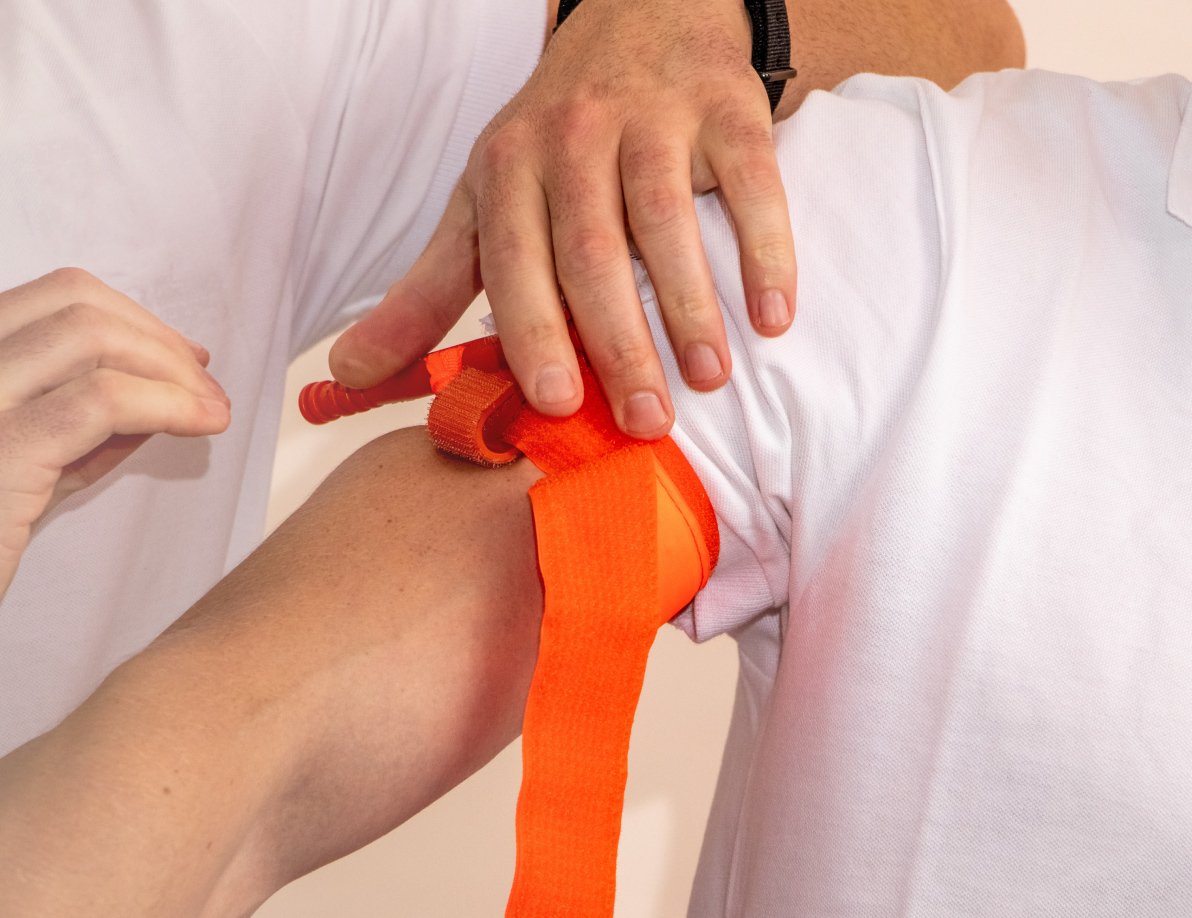
Minutes matter when it comes to uncontrolled bleeding
St. Luke’s University Health Network’s Trauma participates in the national Stop the Bleed initiative to save lives threatened by uncontrolled bleeding, which is the leading cause of preventable death from trauma.

The #1 cause of preventable death after injury is bleeding.
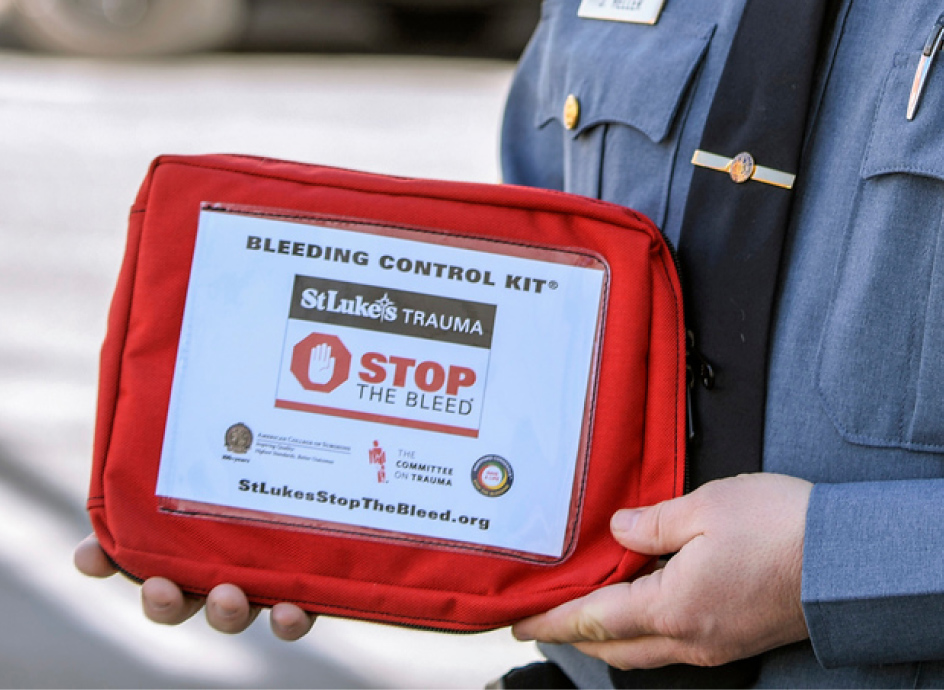
St. Luke’s Stop the Bleed program is part of a national initiative to train the public to control severe bleeding and improve survival after injuries. The program offers free training to police, schools, and community groups, and provides Stop the Bleed kits with tourniquets and bleeding control dressings to help manage bleeding emergencies alongside standard first aid kits and AEDs.
When responding to bleeding, remember the A-B-C's
The ABCs of bleeding control: Alert, Bleeding, and Compress are essential actions to help stop life-threatening blood loss within minutes.



Stop the bleed, save a life!
It is important that as many people as possible survive their injuries if they sustain trauma. In this booklet, you will learn the various ways to control bleeding, whether you only have your two hands to use or whether you have a full trauma first aid kit available to you.
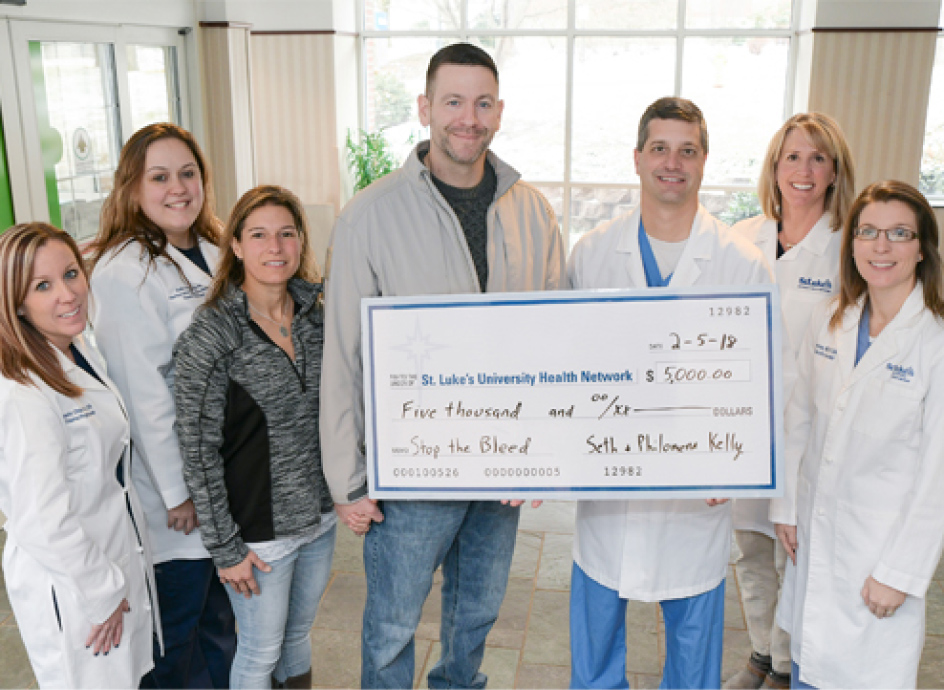
Survivor donates to Stop the Bleed
During a routine traffic stop, PA State Police Corporal Seth Kelly was severely injured in a shootout and used bleeding control techniques to save his life. He was then treated at St. Luke’s University Hospital in Bethlehem, Corporal Kelly and his wife, Philomena, later presented a $5,000 check to Director of Trauma Dr. Peter Thomas and the trauma team in support of the Stop the Bleed initiative.
Enhancing survival after mass shootings
Following the horrific Sandy Hook school shootings in Connecticut, in 2013 a joint committee was formed—the Hartford Consensus™—to create a national policy to enhance survivability from mass casualty shooting events. The Hartford Consensus™ brought together experts from trauma, emergency medicine, law enforcement, fire/rescue, EMS and the military to develop a coordinated response and strategy.
Out of the work done by the Hartford Consensus™, it was determined that much more emphasis must be placed on the survival of victims and skill and training in early control of a life threatening hemorrhage.