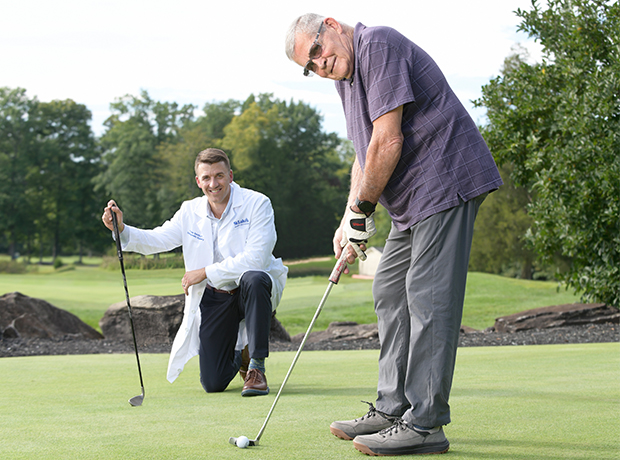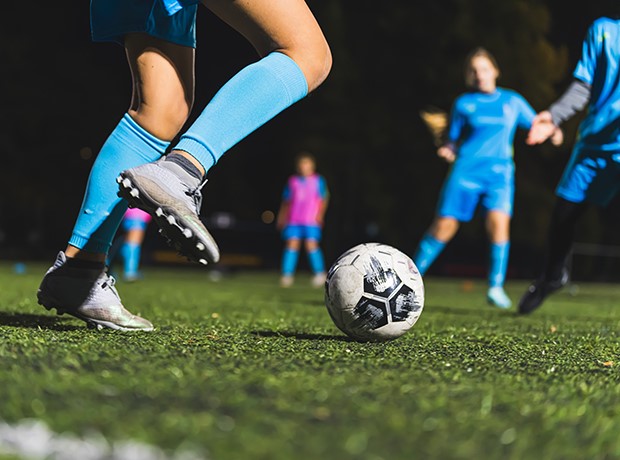
A knee injury can feel like the end of the road, but it is often just a detour. Whether you have suffered an ACL tear, an MCL sprain, or another complex joint injury, the journey back to your sport requires patience and a structured recovery plan. Returning to sport too quickly is a leading cause of re-injury, making professional guidance critical. At St. Luke’s Orthopedic Care, our orthopedic sports medicine specialists help athletes safely reclaim their active lifestyles through progressive, customized rehabilitation.
Understanding your knee injury: ACL vs. MCL
The knee is stabilized by four primary ligaments, with the Anterior Cruciate Ligament (ACL) and Medial Collateral Ligament (MCL) being the most frequently injured in sports. The ACL controls the forward movement and rotation of the shin bone. ACL tears often occur during sudden stops or changes in direction, typically requiring advanced surgical reconstruction and nine to twelve months of intensive rehabilitation.
The MCL, located on the inner side of the knee, provides stability against outward forces. MCL injuries usually happen from a direct blow to the outside of the knee, common in contact sports. Unlike the ACL, many MCL tears can heal without surgery through bracing and physical therapy. At St. Luke’s, our orthopedic team utilizes cutting-edge diagnostics to determine whether an injury requires surgery or if it can be managed conservatively with our customized post-injury rehabilitation programs.
The phases of knee rehabilitation
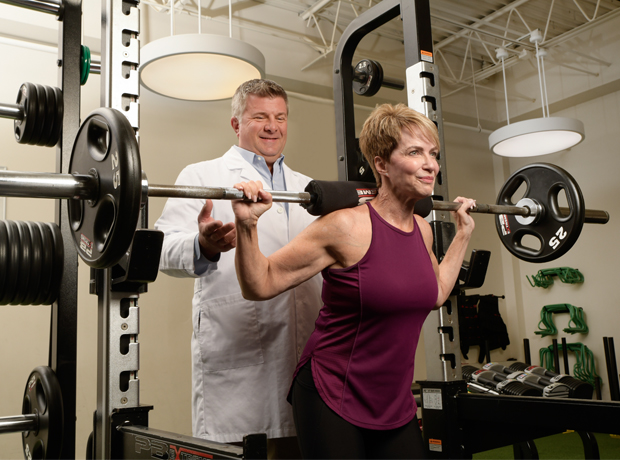
Recovery is not a race; it is a carefully phased process designed to rebuild strength and stability. The initial phase focuses on reducing swelling, managing pain, and restoring basic range of motion. Once the knee can bend and straighten without significant pain, the focus shifts to the build stage. Here, physical therapists introduce targeted exercises to strengthen the quadriceps, hamstrings, and glutes, which act as the shock absorbers for the knee joint.
"Return to sports following ACL surgery or other ligament injury is specifically tailored to each patient and involves many factors like timing, strength, motion, physical exam, and psychological readiness. Guidance by an experienced sports medicine surgeon prior to returning to sports is critical to help minimize risk of re-injury." ~Dr. Matthew Best, MD.
As strength improves, athletes enter the advanced stage of rehabilitation. This phase bridges the gap between basic strength and athletic movement. St. Luke’s rehabilitation specialists incorporate balance training, agility drills, and plyometrics to retrain the neuromuscular system. The goal is to ensure the knee can handle the unpredictable forces of sports without giving way.
When are you ready to return to your sport?
Time alone does not dictate when an athlete is ready to return to play. St. Luke's sports medicine specialists use strict, criteria-based testing to evaluate readiness. Before clearing an athlete, they must demonstrate full, painless range of motion and exhibit full muscle strength.
Schedule an appointment with St. Luke’s Orthopedics
Your comeback story starts with the right medical team. If you are recovering from a knee injury or experiencing ongoing joint pain, expert guidance is essential to ensure a safe return to the activities you love. With multiple locations across Pennsylvania and New Jersey, St. Luke’s Orthopedic Care is close to home. Schedule an appointment with Orthopedic Care by calling 484-526-1735 or fill out our contact form today.