St. Luke’s University Health Network has become the first health care system in Pennsylvania and one of the first nationwide to implement AngioFlow™ by RapidAI, a breakthrough perfusion imaging technology.
AngioFlow is an advanced brain blood flow imaging tool used for acute stroke evaluation, said Dr. Martin Oselkin, neurointerventional radiologist. Traditionally, patients are sent to a CT scanner for perfusion imaging to help physicians make the decision for thrombectomy (clot removal) or not, but AngioFlow allows St. Luke’s to skip the CT scanner and perform the perfusion study right in the operating room.
“This results in at least 35 minutes in time saved,” Oselkin explained, “which is vital to patient outcomes, as 1 million brain cells die with each minute that passes before a clot is removed.”
The advancement further strengthens St. Luke’s position as the regional leader in advanced stroke diagnosis and treatment – and is a testament to St. Luke’s overall excellence. This past fall, the U.S. Department of Health and Human Services ranked St. Luke’s #1 – ahead of Houston Methodist and Mayo Clinic, two of the nation’s most prestigious institutions – as the nation’s top health system for quality, safety, and patient experience. This objective recognition, based on public data reported to the government, reaffirmed St. Luke’s preeminent position among the leading health systems in the country.
AngioFlow is now available at St. Luke’s University Hospital in Bethlehem, a Comprehensive Stroke Center recognized for providing the highest and most advanced level of stroke care and serving as the Network’s hub for leading stroke and neurovascular capabilities.
For patients, the benefits are significant. Real‑time perfusion imaging supports:
- Shorter procedure times, which can directly improve outcomes in stroke.
- Earlier identification of salvageable brain tissue, increasing the chance of functional recovery.
- More precisely tailored interventions, reducing the risk of complications.
- Enhanced safety, as clinicians have immediate insight into how treatment is affecting blood flow in real time.
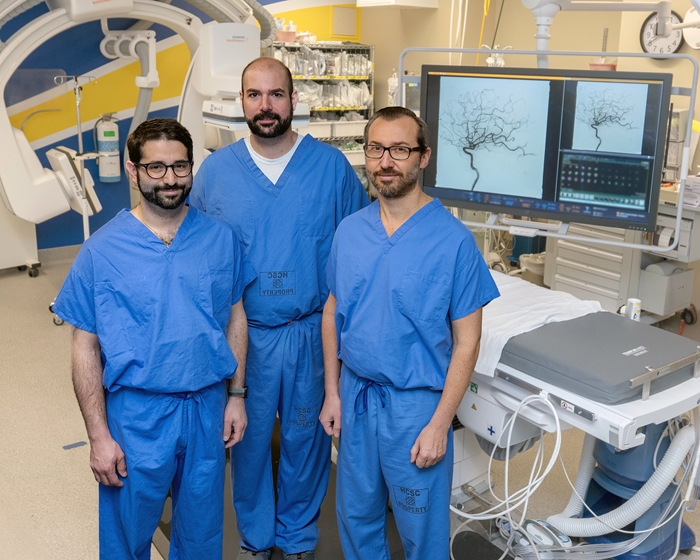
At St. Luke’s, these advanced stroke and neurovascular interventions are performed by Oselkin and endovascular neurosurgeons Dr. Evan Marlin and Dr. Nathan Quig. Together, they lead the Network’s commitment to elevating stroke care across the region through innovation, rapid response and leading‑edge technology.