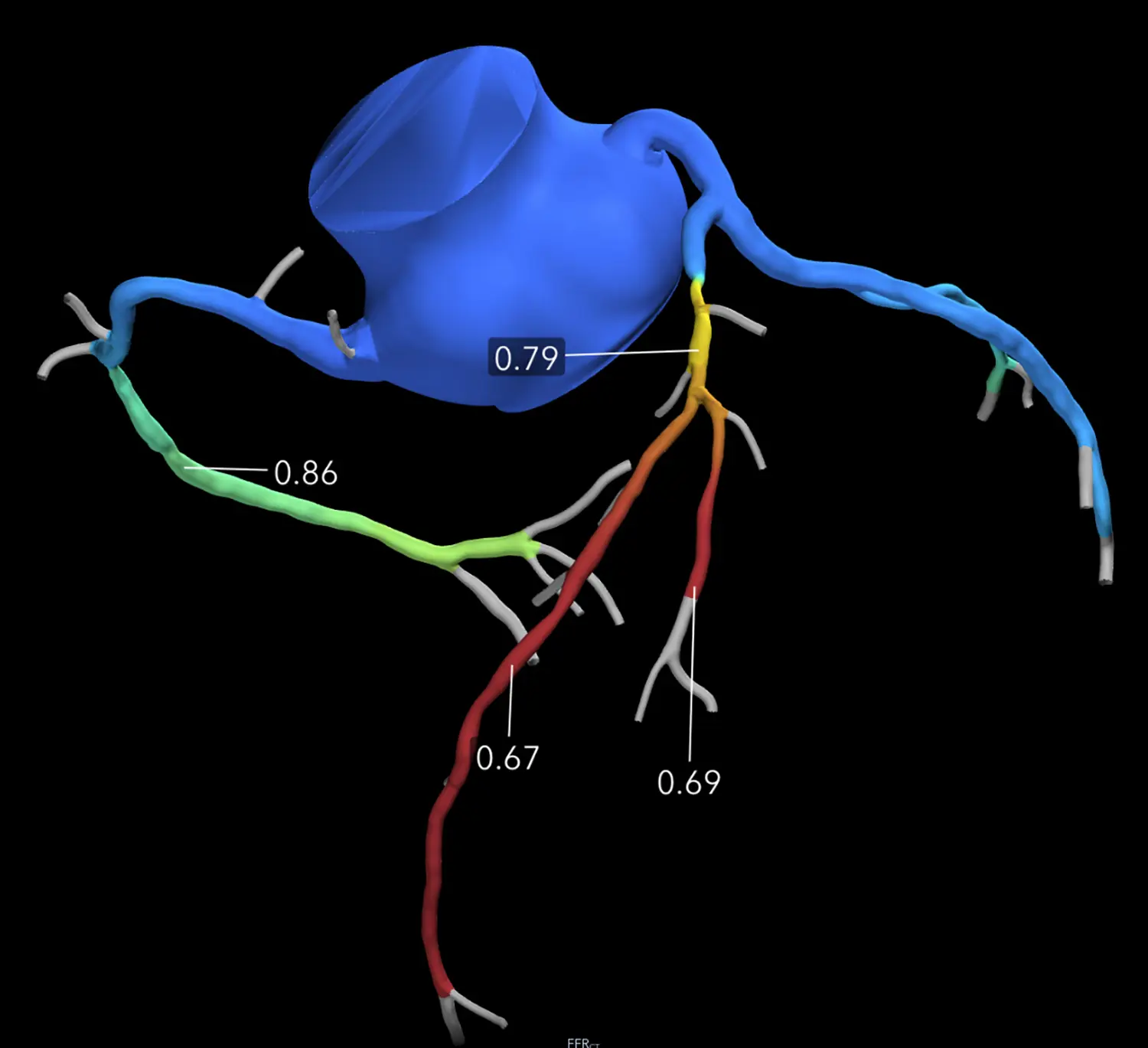
Heartflow FFR-CT Analysis can help more accurately determine if a person with suspected coronary artery disease should be treated for heart disease.
St. Luke’s University Health Network now offers a proven, non-invasive diagnostic option for people with suspected heart disease: Heartflow FFR-CT Analysis. This test may reduce the need for invasive cardiac testing and is offered hospitals throughout the Network.
Here’s how it works: Computed tomography (a CT scan) is combined with fractional flow reserve (FFR). This measures the ratio of blood flow in a potentially diseased and narrowed coronary artery to blood flow in the same artery when not constricted. Trained analysts using AI algorithms then create an anatomical model of a person’s heart that helps physicians visualize the blood flow and detect stenosis, or plaque, that obstructs the blood flow.
“Historically, we have been faced with either using tests that were frequently inaccurate or putting a patient through an invasive procedure just to determine whether they would need another invasive procedure to restore blood flow,” said David Furman, MD, St. Luke’s Medical Director of Computed Tomography. “The Heartflow FFR-CT Analysis completely changes this paradigm, providing essential information that can help us determine the right approach for a patient through a convenient, non-invasive platform.”
Heart disease is the leading cause of death for adults in the United States, and coronary artery disease (CAD) is the most common type of heart disease, affecting nearly half the adult population. CAD develops when the arteries leading to the heart narrow or become blocked, which may lead to a reduction in blood flow to the heart. This can cause chest pain, heart attacks and death. Identifying exactly where and how an artery is blocked or clogged can help improve a person’s treatment plan -- including whether or not an intervention is needed.
Despite CAD being the most common form of heart disease, studies have shown there is a need to improve how and when CAD is evaluated and diagnosed. Many of the non-invasive tests available today offer a low accuracy rate in detecting CAD. About 4 million diagnostic tests are conducted on patients with chest pain suspected of having CAD each year in the U.S. -- many of which are unnecessary.
Purujit Thacker, MD, St. Luke's cardiologist with expertise in advanced cardiac imaging, also highlighted the benefits of this innovation: "As a cardiologist, my greatest satisfaction comes from preventing heart attacks and other serious cardiovascular events. The Heartflow Analysis enhances our ability to detect and address heart conditions before they become critical, ensuring our patients receive the best possible care."