St. Luke’s University Health Network (SLUHN) has expanded its comprehensive sleep medicine program with the addition of the remedē® System, an innovative implantable therapy for adults living with central sleep apnea (CSA). The therapy further strengthens St. Luke’s position as a regional leader in providing advanced, personalized treatment options for patients suffering from sleep-disordered breathing.
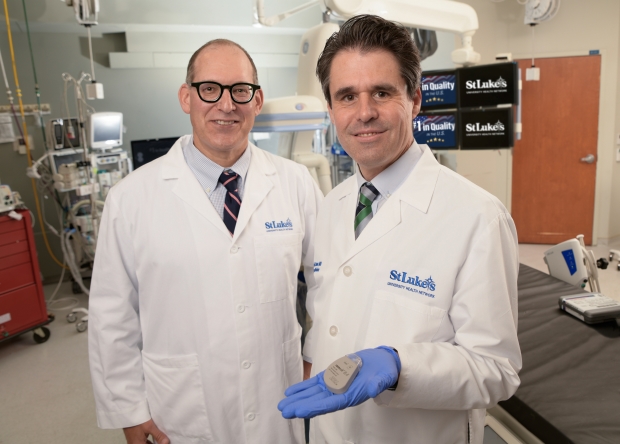
St. Luke’s Sleep Medicine, which is part of St. Luke’s Neurosciences, recently became the first program in the region to offer the remedē System. The first two procedures at St. Luke’s were successfully performed by electrophysiologist Darren Traub, MD, SLUHN Section Chief of Electrophysiology, underscoring the Network’s collaborative, multidisciplinary approach to treating complex sleep disorders.
Sleep apnea affects millions of Americans and can significantly impact quality of life, contributing to excessive daytime fatigue, cardiovascular complications and other serious health concerns. Central sleep apnea can often be seen in association with congestive heart failure, atrial fibrillation, neurological disease and other underlying medical conditions. Because no single therapy works for every patient, SLUHN offers a full spectrum of advanced treatment options tailored to each individual's diagnosis and needs.
The addition of the remedē System complements SLUHN’s existing suite of implantable sleep apnea therapies, which includes:
- Inspire® Upper Airway Stimulation for eligible patients with obstructive sleep apnea.
- Genio® Bilateral Hypoglossal Nerve Stimulation, an innovative, battery-free therapy that stimulates the hypoglossal nerve to help maintain an open airway during sleep.
Unlike therapies designed to treat obstructive sleep apnea, the remedē System is specifically indicated for adults with moderate to severe central sleep apnea, a condition in which the brain fails to send proper signals to the muscles that control breathing during sleep. The device monitors breathing patterns and delivers gentle stimulation to the phrenic nerve, helping restore a more natural breathing rhythm throughout the night.
“Sleep apnea is not a one-size-fits-all condition,” said Dr. David Cohen, SLUHN Section Chief of Sleep Medicine. “By offering the remedē System alongside Inspire and Genio, St. Luke’s can provide a broader range of evidence-based therapies and help more patients find a treatment option that improves both their sleep and overall health.”
Patients with untreated sleep apnea often experience poor sleep quality, daytime sleepiness and reduced concentration. Sleep apnea may also be associated with a range of underlying cardiovascular and neurological conditions, depending on the type of sleep apnea and the individual patient. St. Luke’s Sleep Medicine evaluates patients to determine the most appropriate therapy based on the type and severity of sleep apnea, anatomy, medical history and treatment goals.
“With the addition of the remedē System, St. Luke’s is further enhancing our ability to deliver personalized care for patients who may not have found success with traditional therapies,” adds Dr. Cohen. “Our goal is to ensure that every patient has access to the most advanced treatments available.”
Patients interested in learning can visit sluhn.org or speak with their physician about a referral for evaluation.