By Dr. Tom Whalen
The Lehigh Valley has become accustomed to the health care billboard wars. Drive down Route 22 or Interstate 78, and you are bombarded with dueling claims from St. Luke’s University Health Network and Lehigh Valley Health Network about who has the best doctors, the newest facilities, the most advanced robots, or the biggest expansion plans. Most of us tune it out.
But occasionally, there is a claim that should make people stop and pay attention because it is not marketing spin. It is measurable. It is independently verified. And it matters profoundly when your spouse, child, parent or you are lying in a hospital bed. That is the case with the extraordinary quality and patient safety performance now being achieved by St. Luke’s University Health Network.
This is not about prettier commercials or larger physician networks. This is about whether patients live or die, whether infections are prevented, whether medical errors are reduced, whether complications are avoided, and whether care is delivered consistently at a high level across an enormous health care enterprise.
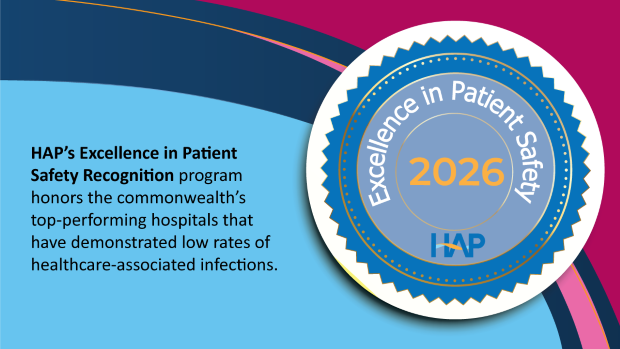
The numbers are difficult to dismiss. St. Luke’s hospitals have repeatedly earned “A” safety grades from the Leapfrog Group, the nationally respected nonprofit watchdog that evaluates hospitals on preventable errors, infections, injuries and patient harm. The network has also received five-star ratings from the Centers for Medicare & Medicaid Services, the federal government’s highest quality designation. Premier’s 100 Top Hospitals rankings have repeatedly recognized St. Luke’s hospitals nationally for clinical outcomes and operational performance. News-week has repeatedly listed St. Luke’s among the world’s best hospitals.
One can debate rankings systems individually. No methodology is perfect. But when multiple independent organizations, federal agencies, national watchdogs, academic evaluators and industry analysts repeatedly converge on the same conclusion, it becomes increasingly hard to argue that this is a coincidence or clever public relations.
It reflects culture. And culture in health care does not emerge accidentally. As a retired physician and former healthcare executive at LVHN, I can say plainly that organizations do not achieve sustained quality excellence simply by hiring talented clinicians. Every hospital in America has smart doctors and dedicated nurses. What separates elite-per-forming systems from average ones is whether quality and safety become institutional obsessions. That begins at the top.
Health care quality is not delegated. It is led. Boards must insist on it. CEOs must relentlessly prioritize it. Senior leader-ship must demand transparency, accountability, measurement and continuous improvement. Physicians must buy into it. Nurses must believe leadership supports safe practice rather than merely talking about it. Frontline employees must feel empowered to identify risks and report problems without fear.
That level of organizational alignment is exceedingly difficult to build across a health network with more than 20,000 employees and dozens of campuses and outpatient sites. Yet that is precisely why the St. Luke’s results deserve serious recognition.
There is another reality that health care outsiders often miss: quality success depends heavily on the strength of the organization’s quality leadership itself.
The chief quality officer cannot merely be symbolic. Her role requires uncommon capability. The person must understand clinical medicine deeply enough to command a physician’s respect. They must understand systems engineering, patient safety science, infection prevention, data analytics, regulatory frameworks and organizational psychology. They must communicate constantly and persuasively across every level of the institution. Most importantly, they must receive the authority and empowerment from the CEO to drive change.
Without the CEO and board’s empowerment, quality leaders become little more than compliance officers producing reports nobody reads. When quality leaders are truly empowered, however, the culture changes. Data are scrutinized. Poor outcomes are confronted honestly rather than hidden. Near misses become learning opportunities instead of sources of blame. Departments compete to improve performance. Excellence becomes contagious.
The public often notices gleam-ing new towers and advanced technology. But health care insiders know that quality culture is built in quieter ways: in infection control meetings, surgical check-lists, mortality reviews, nursing communication, handoff protocols, medication reconciliation and relentless measurement of outcomes. None of that is glamorous. All of it matters.
And amid today’s increasingly corporatized health care environment, where mergers, branding campaigns and market-share battles dominate headlines, there is something refreshing about objective quality metrics that cut through the noise. Patients should care less about advertising slogans and more about outcomes that are independently validated.
The Lehigh Valley is fortunate to have two large, sophisticated health systems competing intensely. Competition can drive innovation and expansion. But when one organization demonstrates sustained, nationally recognized excellence in safety and quality, the community should acknowledge it honestly rather than dismiss it as another billboard claim. Because this is very real.
When health care quality improves, septic infections decline. Medication errors decrease. Surgical complications are reduced. Readmissions fall. Mortality improves. Families suffer less. Lives are saved. And costs are reduced. Those outcomes are not abstractions. They are the difference between tragedy and recovery at the most vulnerable moments in human life. And they occur only when an entire organization, from trustees to transport staff, commits itself to excellence every single day.
This is a contributed opinion column. Dr. Tom Whalen is a retired pediatric surgeon. He served as chief medical officer of Lehigh Valley Health Network from 2011 to 2021. Do you have a perspective to share? Learn more about how we handle guest opinion submissions at themorningcall.com/opinions.