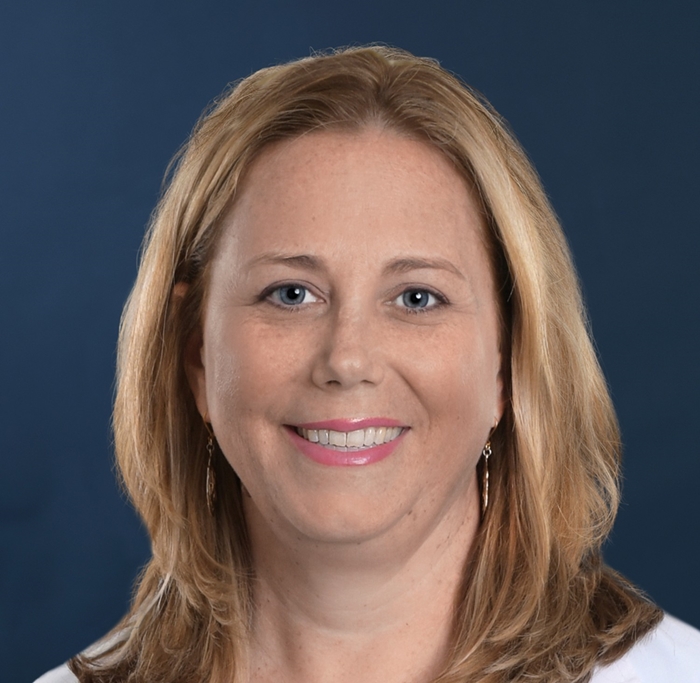
Whether she’s leading a team during a code in the ICU, teaching a resident how to interpret data on a remote monitor or explaining to senior administrators how a new clinical pathway can improve outcomes in patients, Nicole Yoder, DO, says she relies on her communications skills as often as she does her medical expertise.
Nearly two decades ago, Dr. Yoder joined St. Luke’s as an internal medicine resident after graduating from Lake Erie College of Osteopathic Medicine. Today, she is board-certified in Internal Medicine/Pulmonary/Critical Care, serving as St. Luke’s Network Chairman of Critical Care Services and Vice President of Medical Affairs at St. Luke’s Upper Bucks and Quakertown campuses.
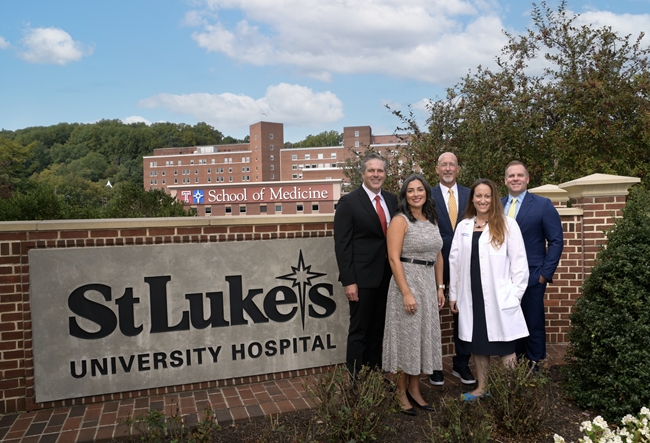
Her story shows what is possible career-wise for physician residents who come to St. Luke’s, the region’s premier teaching hospital.
Dr. Yoder has been on St. Luke’s medical staff for the past 17 years, after graduating from Lake Erie College of Osteopathic Medicine, serving an internal medicine residency at St. Luke’s and completing a fellowship in pulmonary/critical care medicine at the Medical College of Virginia at Virginia Commonwealth University.
She finds inspiration and fulfillment every day at St. Luke’s to continue her leadership, clinical and teaching roles, stemming from the organization’s values, people and practices that drew her initially to Bethlehem for post-graduate training in 2003.
“I love our culture of communication and collaboration,” she says. “That’s why I came back to St. Luke’s and why I stay here.”
Paraphrasing St. Luke’s long-time president and CEO, Richard A. Anderson, she adds that open communication, “is the secret sauce here,” and it helps to explain why and how the Network has earned so many national and state-based awards and recognitions for clinical excellence.
“Medical care is a team sport. It’s all about relationships… You can talk to anyone here at St. Luke’s, at any level, and that is why our quality is so good.”
Not all health systems prioritize communication like St. Luke’s, Dr. Yoder points out. Each patient encounter and physician interaction—from the simple to the challenging— over the past 17 years has reinforced her belief in this institutional bedrock.
“And as an organization grows, it becomes more critical that its culture of collaboration remains intact.” This starts at the top levels at St. Luke’s and permeates every corner and conversation, Dr. Yoder explains.
In addition to treating the sickest of the sick in the ICUs or on pulmonary floors, Dr. Yoder thrives at representing physicians and providing input at “the board room table” where decisions are made that can affect the clinical teams.
“I help the non-clinical administrators understand how changes could ultimately impact patient care and quality.”
She’s especially proud of her role in introducing the same standard of critical care throughout SLUHN with support from intensivists who travel among the hospitals as needed.
“We now practice a high level of critical care in small communities so patients can receive care nearby, to their family and friends” she says.
Just as fulfilling are Dr. Yoder’s conversations with her critical care colleagues away from the pressured pace of the ICU as they explore their hopes and goals for their future in the Network. In addition to the joy of watching young attendings grow and develop, she cites research that these talks help reduce provider burnout and increase job satisfaction.
“I like to help the docs develop and pursue their passions, advance their careers and to help remove roadblocks to taking good care of patients,” she says. “Sometimes we also discuss work/life balance, future leadership opportunities and other non-clinical topics that are brought up”
Among the most meaningful and difficult conversations as a critical care physician, she finds, is discussing goals of care with patients—and family members—especially at advanced stages of disease when treatment can sustain life but not always enhance the quality of living.
“We try to engage families in meaningful dialogue and help them navigate tough decision on behalf of their loved one… I tell them, ‘Making an end-of-life decision for your family is often the most self-less decision you will ever make.’”
Dr. Yoder says she was not taught formally how to have these conversations during her medical training and feels she is still fine-tuning her skills, with help from colleagues.
“AI can’t have this discussion for you, and you can’t learn it from a book,” she says. But with the lightning-speed advances in medical technology, quality-of-life issues arise more often than ever.
“At St. Luke’s, this is part of what we discuss with students, residents, fellows, and with each other. It’s woven into our culture and a key reason that so many colleagues choose to come here and stay throughout their careers.”