When Don, a Lehigh Valley resident, retired after 36 years in financial marketing, he envisioned a chapter filled with giving back, staying active, and enjoying the simple things like travel, time outdoors, and playing pickleball with friends. After serving as Director of Development for the Minsi Trails Council, Scouting America, Don was settling into retirement and embracing a healthy, balanced lifestyle.
He never imagined that a $99 screening test would change everything and ultimately save his life.
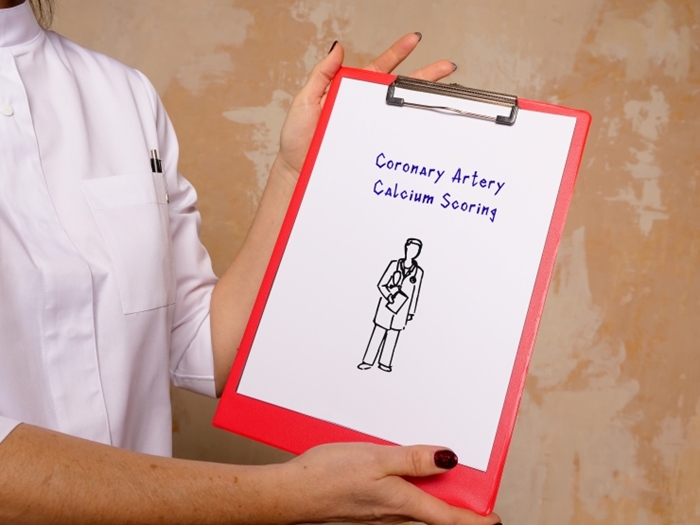
Earlier in 2025, Don read that St. Luke’s was offering a $99 Coronary Calcium Scoring CT Scan - a quick, noninvasive scan that detects calcium in the coronary arteries. Coronary calcium is a marker of plaque buildup, which can serve as an early warning sign of possible heart disease before symptoms appear.
During his annual checkup, Don asked his doctor if it was worth doing. Even though he was healthy with good blood pressure and cholesterol, a healthy body weight and regularly exercised, Don wanted one as a “safety check” due to a family history of heart disease. After a brief discussion with his doctor, the order was put in.
Don had the scan in August. Less than two weeks later, while on vacation, he opened MyChart expecting reassurance.
Instead, he saw a number that stopped him cold: 2,777.
For reference, a calcium score above 400 is considered very high. Don’s was nearly seven times that.
He immediately called his doctor, who told him to see a cardiologist right away.
In September 2025, Don met with Amit K. Gupta, MD, who ordered a full cardiac workup. His EKG came back normal, so they decided the best next step would be a nuclear stress test.
Don’s initial test images were good at first glance, but the end results told a different story.
A subsequent heart catheterization discovered that Don had eight coronary blockages, including a critical 80% blockage in the left anterior descending (LAD) artery. LAD blockages are often referred to as ‘widowmakers,’ and are notorious for causing sudden catastrophic heart attacks without warning.
Stenting wasn’t an option. Don would need coronary artery bypass grafting (CABG).
He was instructed to stop pickleball and golf immediately. Walking was the only activity allowed.
“My first thought was: How did this happen if I felt so good?” Don recalls. “My second thought was: Thank God I took that test.”
Don set a personal goal to enter surgery as strong as possible. As a form of ‘pre-habilitation’ he walked 3.5 miles every day leading up to his CABG with William E. Gioia, DO, at St. Luke’s Bethlehem Campus on October 10.
“Don did everything right. He listened to his body, took proactive steps, and approached recovery with remarkable discipline and optimism,” Dr. Gioia said. “Patients like Don remind us why early detection truly saves lives.”
Don was truly in the best of hands.
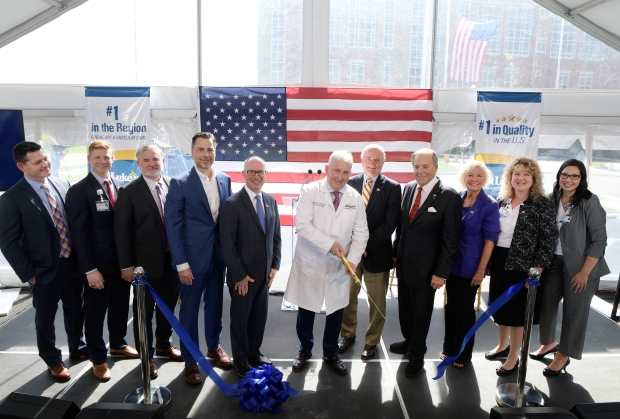
In 2025, the U.S. Department of Health and Human Services ranked St. Luke’s #1 – ahead of Houston Methodist and Mayo Clinic – as the nation’s top health system for quality, safety and patient experience. This objective recognition based on hospital data reported to the government reaffirms St. Luke’s preeminent position as a leader among the largest and most respected health care providers in the country. The Heart and Vascular team at St. Luke’s represent one of the many specialty services whose consistent excellence contributes to the award-winning care provided by the Network.
The surgery went smoothly, but recovery wasn’t without its challenges. Don spent his first four days in the cardiac ICU, cared for by what he describes as “an extraordinary team.” After discharge, St. Luke’s Visiting Nurses guided him through the earliest days at home.
True to form, Don set (and achieved) ambitious milestones: walk one mile by the end of his first week of recovery, walk two miles by the end of week two, and walk three miles by the end of week three.
In cardiac rehab, Don continued to build on that strong foundation. Physiologists monitored him closely, even catching and attending to a premature ventricular contraction (PVC) incident as it occurred.
Today, Don is thriving. He continues cardiac rehab multiple times per week and is back to playing pickleball 3–4 days a week, even joining group coaching sessions to refine his game.
“At St. Luke’s, every step of the way was smooth - from pre-surgery to recovery to cardiac rehab and follow-ups,” Don said. “The care was excellent. My heart was truly in the best hands.”